Ecuador: Andes, Amazon, Galapagos Islands
One day I asked my husband, Darren, “Do you want to see giant tortoises in the Galápagos Islands?” To which he replied, “Yes, I want to see giant tortoises in the Galapagos Islands!” And with that in-depth conversation, we planned our next getaway. As I always do with our trips, I write a travel blog for my own entertainment. Feel free to travel along or just enjoy the pictures.
We booked a 10-day trip to Ecuador through Exoticca, our fourth trip with the company. The trip would be to Quito, the capital of Ecuador, the Amazon rainforest jungle, and, finally, the Galapagos Islands.
Missy Travel Tip: Pack only a carry-on and backpack. Our checked luggage was lost for three days when we went to The Maldives, so lesson learned. Make sure to leave enough room for a few souvenirs. We like to buy t-shirts on our trips, so we know to pack fewer than what we’ll need. Also, take a laundry bag to stuff with your dirty clothes. It will fit in one carry-on and the other items will fit in your partner’s if you travel with one.
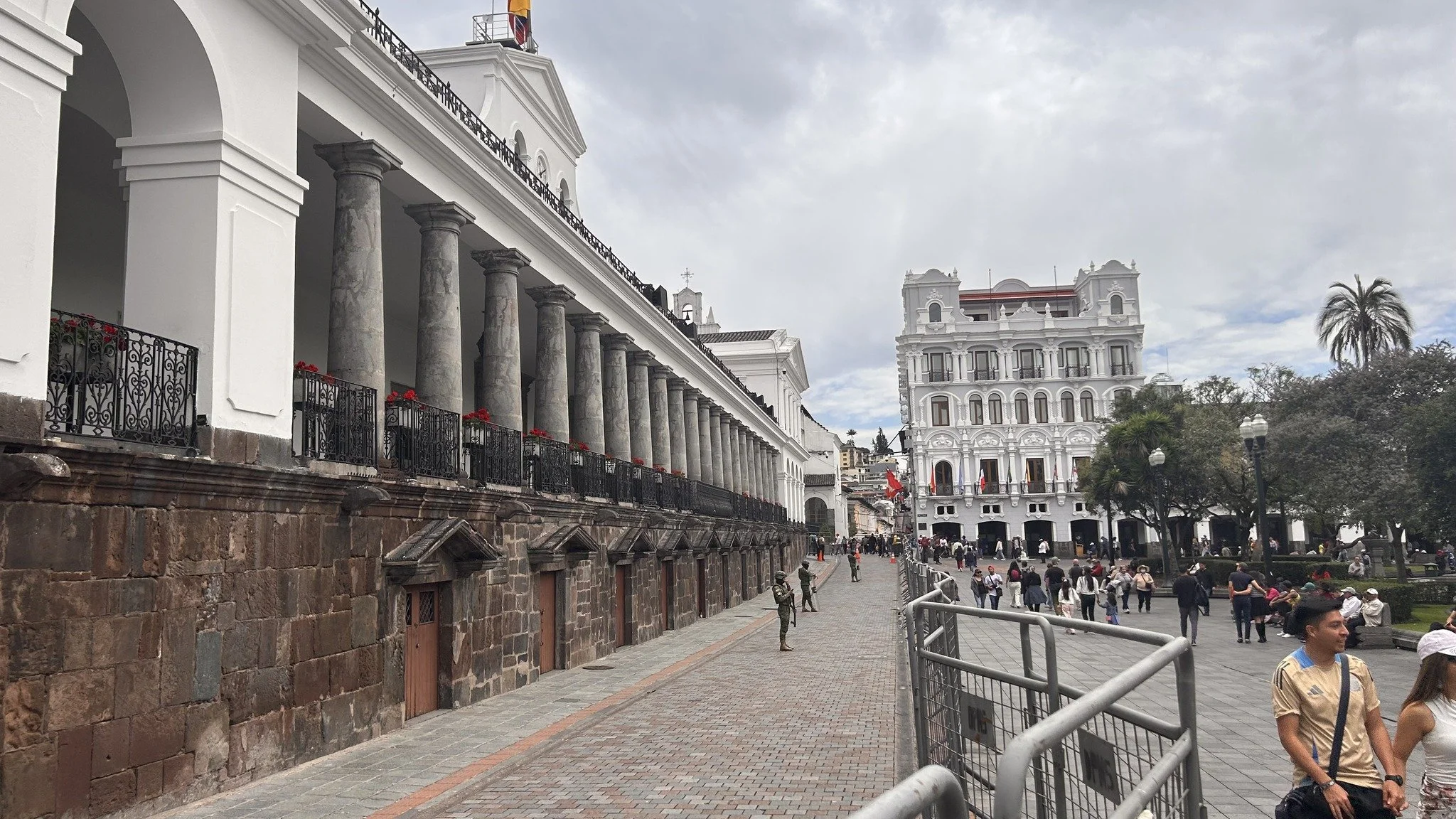
We arrived in Quito in time for a brief dinner at The Hotel Dann Carlton, our five-star lodging, and we headed to bed after a drink in the hotel bar. The next morning, we met our Exoticca travel group, which is the smallest we have been on so far. Including us, it was only 12 people with the others being from the U.S. and England. The day started with a walking tour of Quito’s historic district with Jorge, who would be our guide for the next few days.
Quito is the second-largest city in Ecuador. We visited the Basilica of the National Vow, the largest neo-Gothic Basilica in the Americas, completed in 1892. We also took an obligatory picture with Pope John Paul II’s Popemobile from his visit in 1985.
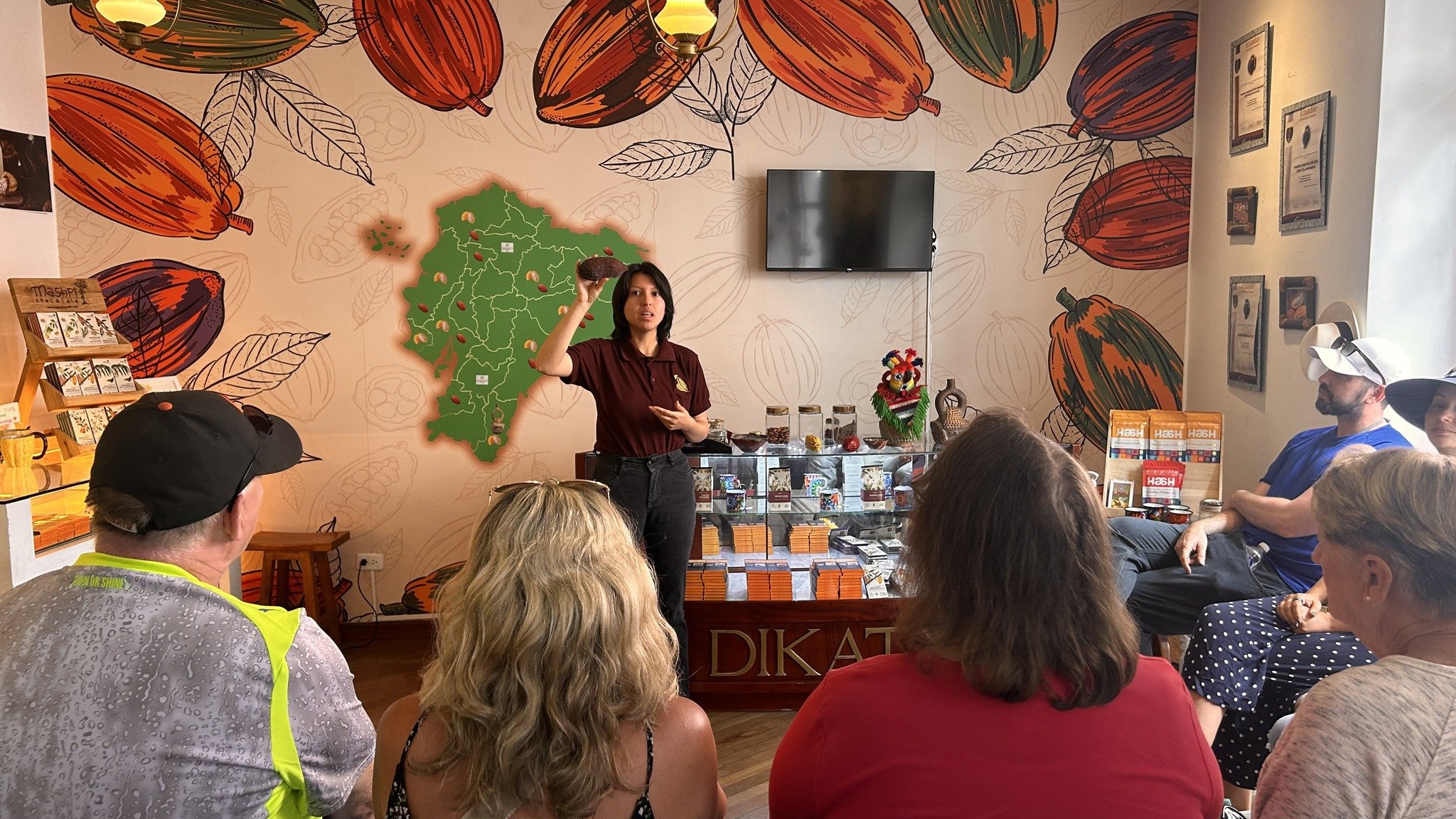
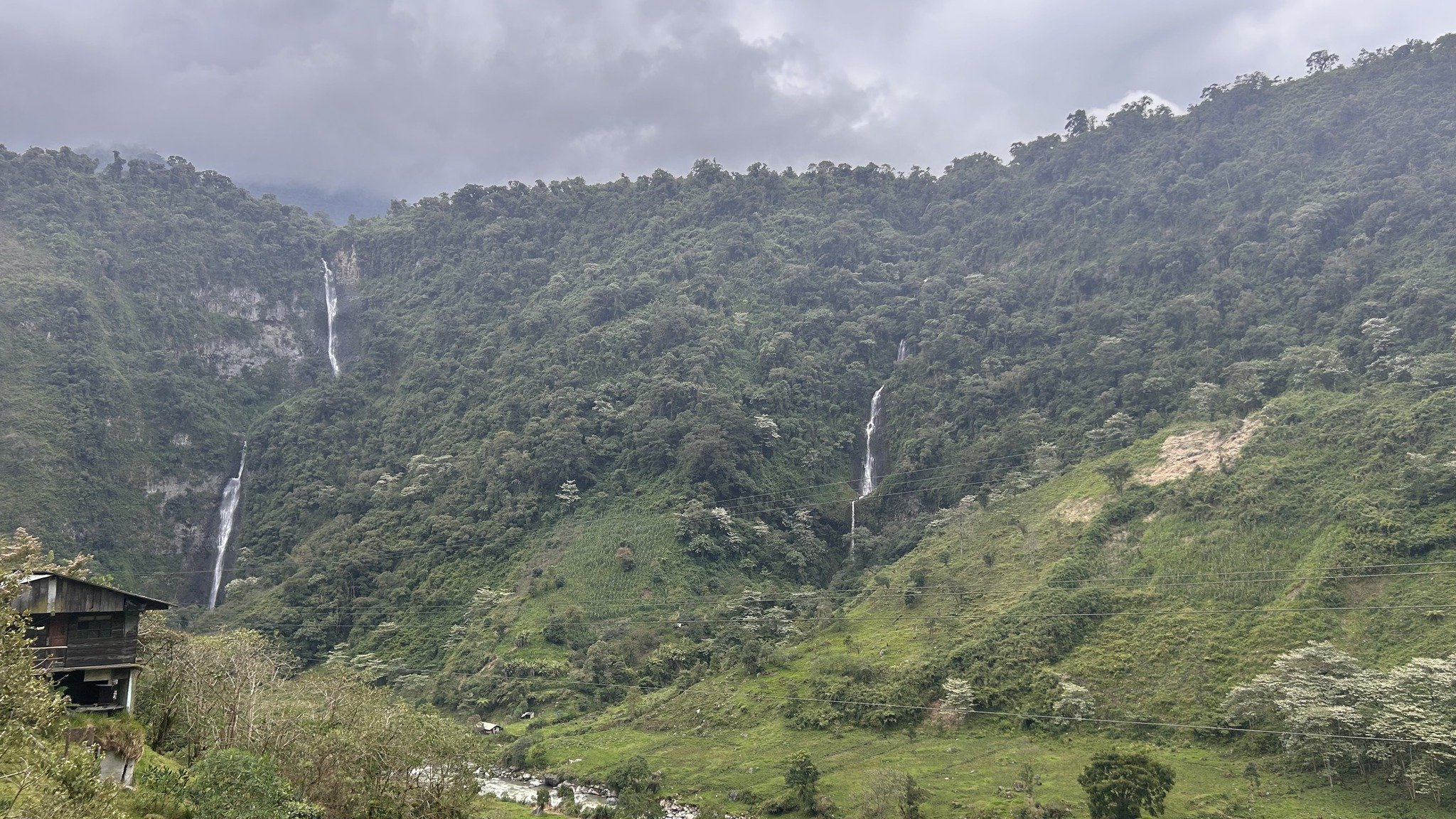
We stopped at Dikatay Chocolates to learn about Ecuadoran chocolates and had some incredible samples. After visiting some other locations, we boarded our bus for the five-hour ride to the rainforest. It’s not that far distance-wise, but you have to go OVER the Andes Mountains, which are spectacular. You remember the scene in “Romancing The Stone” where Kathleen Turner is on a bus in the Columbian mountains? I had some flashbacks to that. At the top of the Andes, we were at 13,346 feet staring at another active volcano. We also stopped at Tres Marias, where three waterfalls are visible on one mountainside.
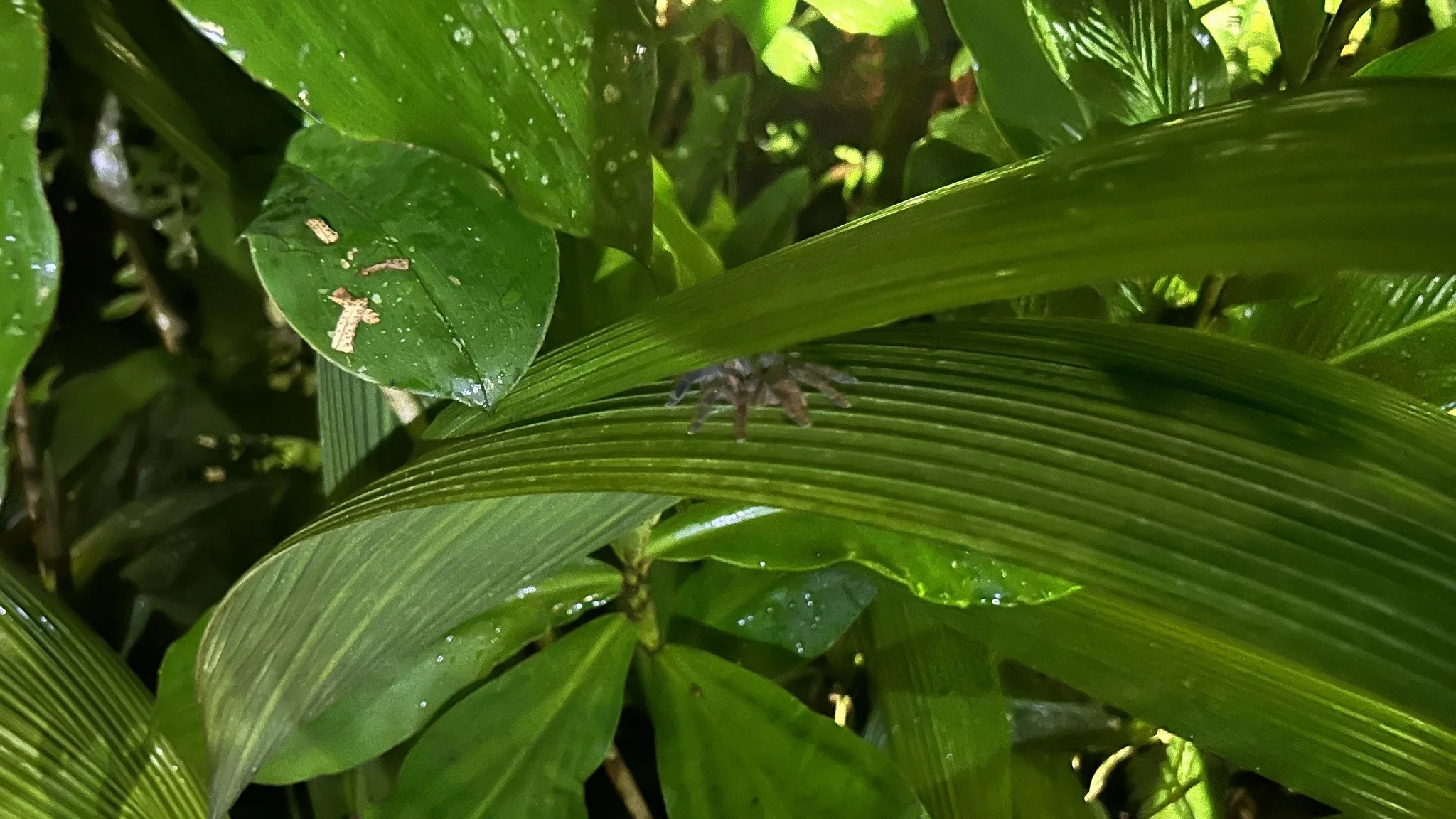
After a stop for a late lunch, we arrived at our eco-resort for the next few days, Hakuna Matata! We did a night hike and found some local critters, including a baby tarantula, leaf cutter ants, and some other pretty impressive insects. Our room is open air (no windows, just screens), and we fell hard asleep to the sounds of the jungle and a heavy rainfall.
Since we arrived at night, we awoke to our first views of the Amazon rainforest. Wow! We opted out of a nature hike that focused on plants and explored the Hakuna Matata eco-lodge. Our room was very nice as was the rest of the resort. It was comfortable without being luxurious, and everything was open-air. Meals were made by local women, and it was terrific. They were also very accommodating to me, their vegan guest.
Our day truly began as we boarded pickup trucks to take us to an animal preserve island along the Napo River. The Napo is the 11th largest tributary to the Amazon River, which is north of us in Peru. Fun fact…48% of Ecuador is considered to be in the Amazon, but that 48% is only 1% of the entire South American Amazon region.
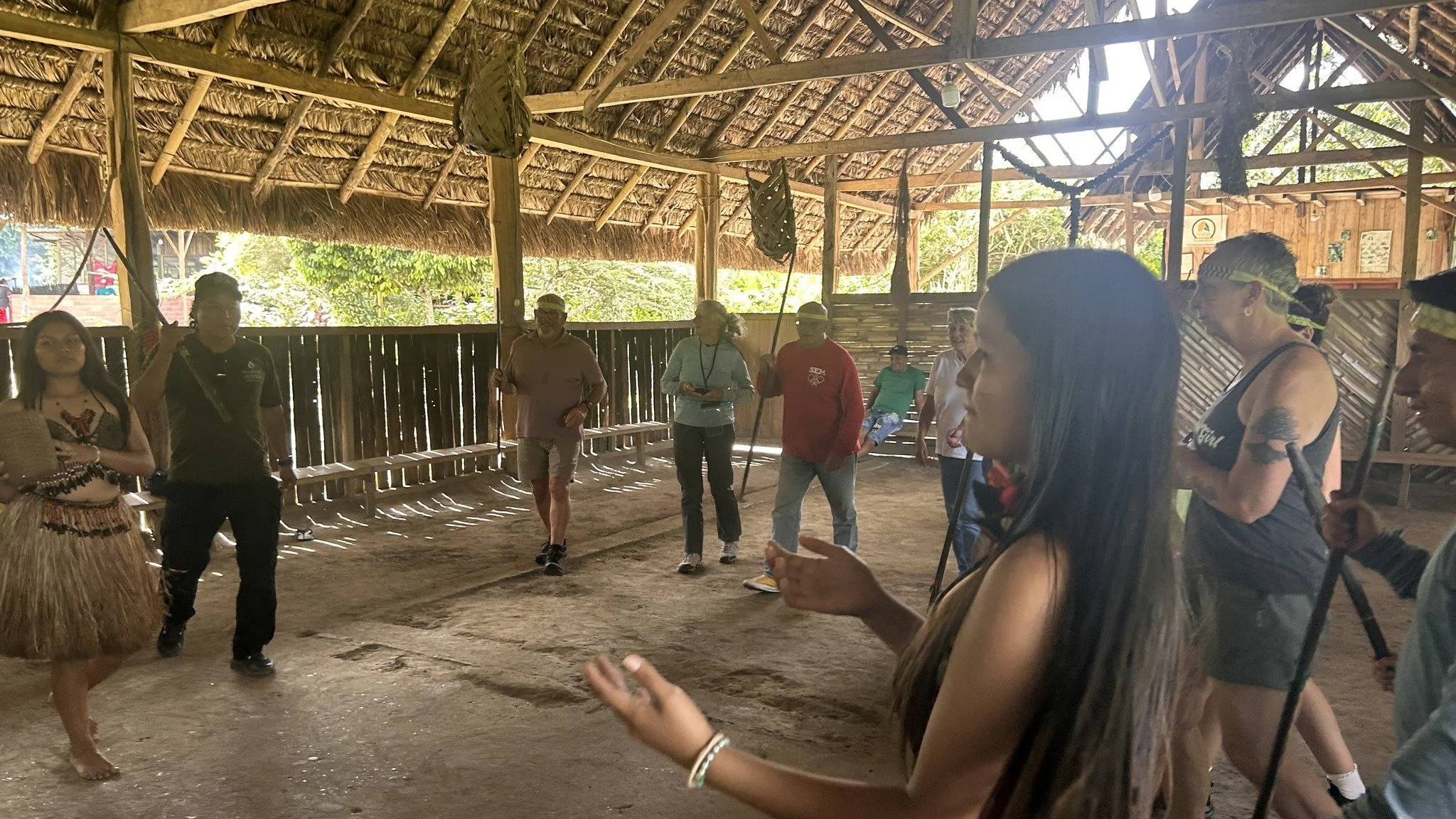
Our first stop was the Tena Wildlife Walk where we boarded a canoe to the island, hoping to see monkeys in the wild! We ended up seeing five species, including a very playful capuchin who wanted some bananas. We also saw two sloths, but only through good binoculars. From the ground they looked like a brown nest high in the trees. After the island, we headed to Shiripuno for lunch and a visit with some of the native women. We took a brief boat ride on the Napo River and then visited the pavilion where we learned more about the native people. We had our faces painted with traditional designs and danced with them. It was joyous.
We returned to Hakuna Matata for a wonderful meal. After a drink at the bar with our new Exoticca tour friends, we headed to our room, split a bottle of wine, and dropped off to sleep. Alas, no overnight rain to listen to, but we still slept hard.
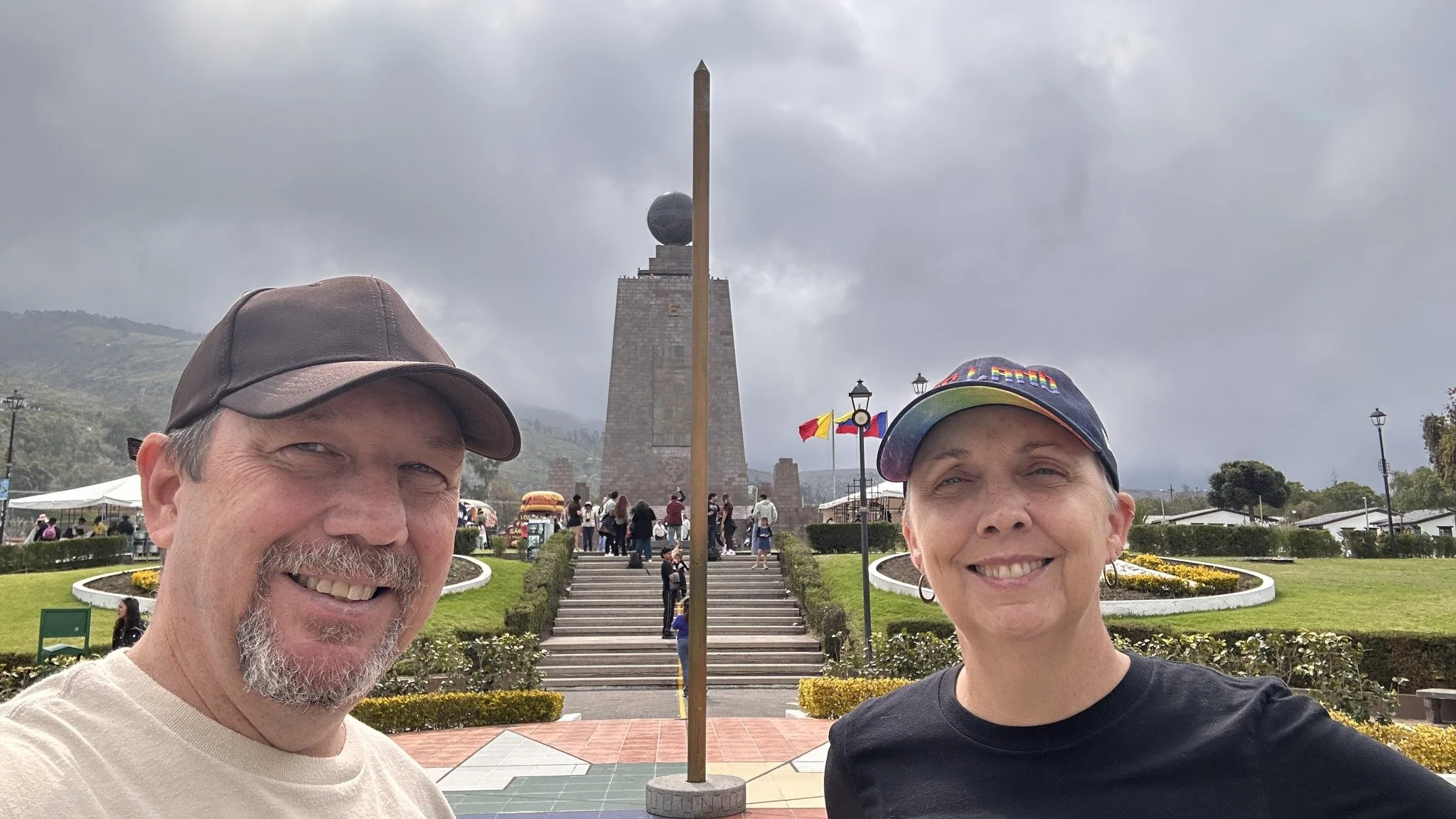
In the morning it was adios to the Amazon! We headed back to Quito after a quick stop at a local, open-air market to see how dishes are cooked in leaves. Once again, the trip back over the Andes Mountains takes about five hours, so we were ready for lunch when we arrived at our next tour stop, The Center of the World City. Quito lies on the equator (Latitude 0-0-0), and the location is marked by an eight-story pyramid-style museum topped by a globe. By straddling the painted line, you are in both the northern and southern hemisphere at the same time. I never thought of it before, but sunrises and sunsets are at the same time year-round here…around 6:30 am and 6:30 pm. Also, you can balance an egg on a nail head! The Center of the World City is actually a large park made up of permanent eateries, shops, and small museums. We had lunch and then did some exploring. For the COTW museum, you take an elevator to the top for some panoramic views. Then you descend the stairs and visit the displays on each floor.
We arrived back at the same hotel we’d left a few days earlier, but this time we had a suite! We had a nice dinner on the restaurant’s patio, a drink in the bar, and headed to bed for a busy day ahead.
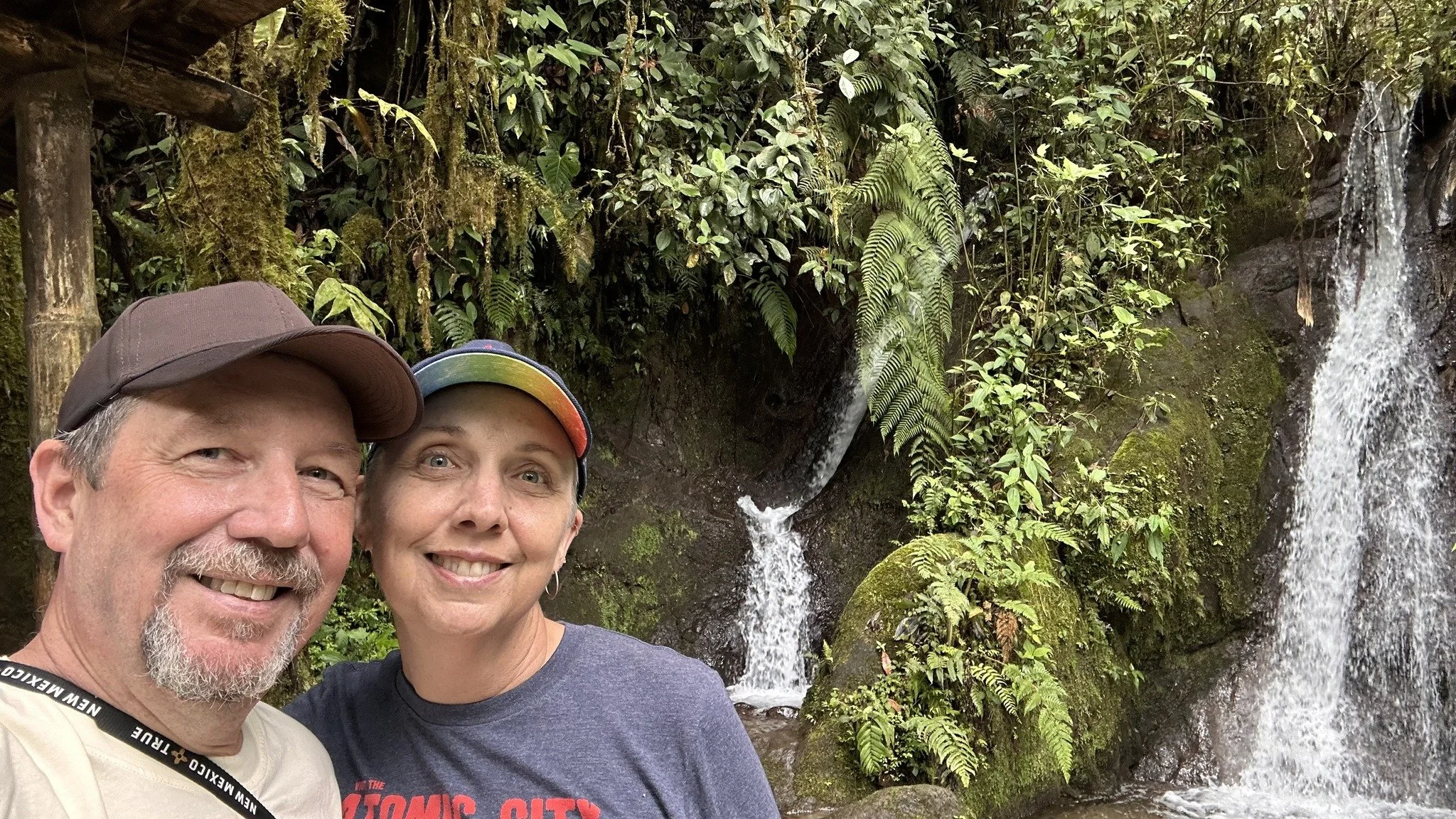
During our visit, we were offered the opportunity to visit a cloud forest in Mindo, about 2.5 hours from Quito to the east. Seven of us opted to go, and the drive there was jaw-dropping as our bus slalomed through the mountain roads. After we arrived at our destination, we had to disembark and take a pickup truck 20 minutes up the mountain to where we would hike to some local waterfalls.
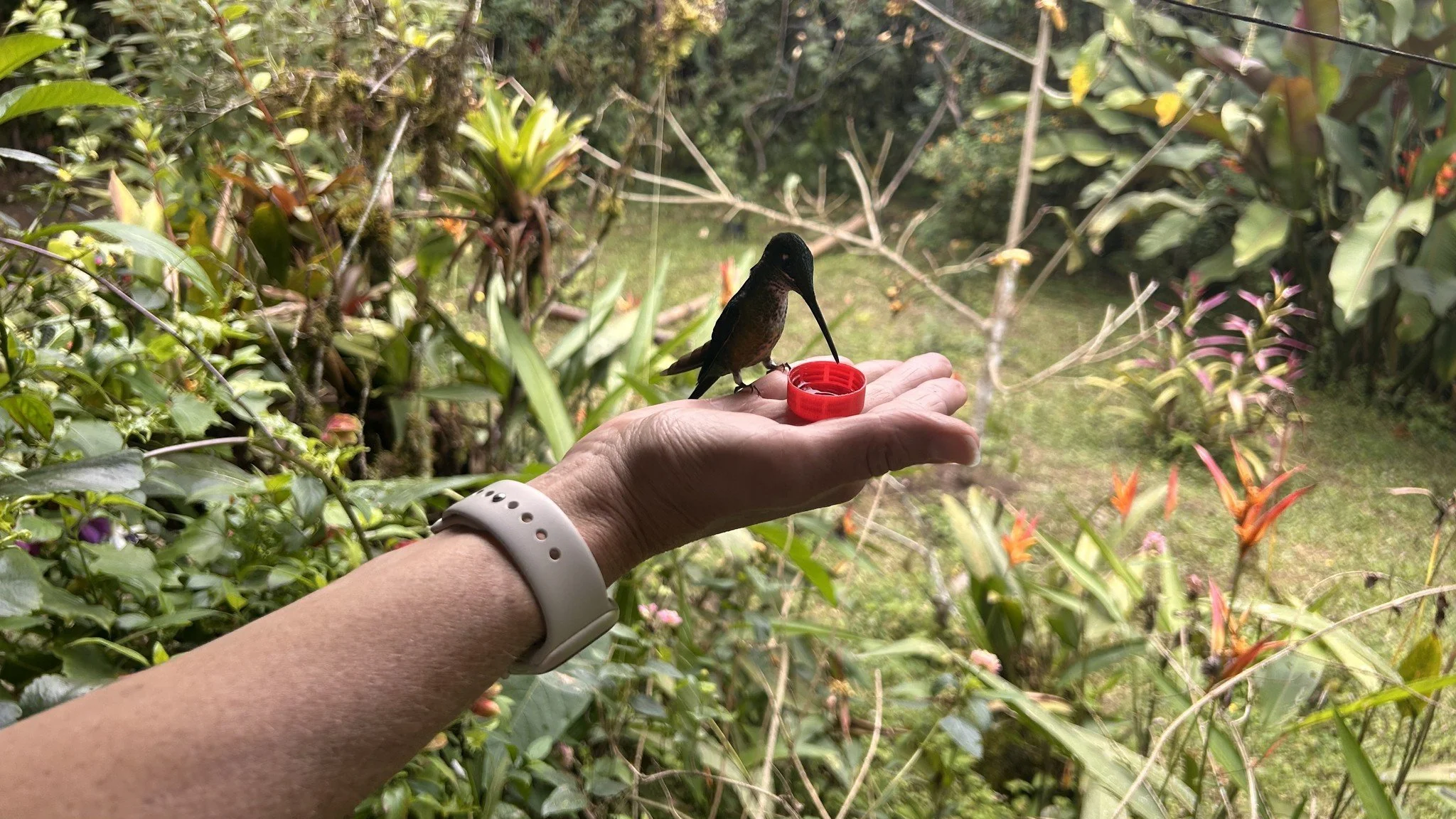
At the top we started with visit at a wild hummingbird sanctuary. You hold an inverted soda cap filled with sugar water, and the hummingbirds land on your hand to drink. You could feel their feet tickle your hands and the wind generated by their wings. It was just so cool! Jorge, our guide, had never done this particular excursion because it was a last-minute add-on by Exoticca. We saw some beautiful scenery, but the hike was much more strenuous than any of us anticipated. We still had a great time and eventually took a hummingbird shaped cable car back across the deep valley to return to the vehicle.
From there, we went to a local zip-line company where, for $20, you got 10 lines over the mountain valleys. We have zip-lined in Costa Rica, Mexico, and West Virginia, but this was the best tour we have ever done. The guides were quick, the views were stunning, and they would even take your phone and follow behind you and video the ride. After lunch and a brief visit to a little butterfly sanctuary, we headed back to Quito.
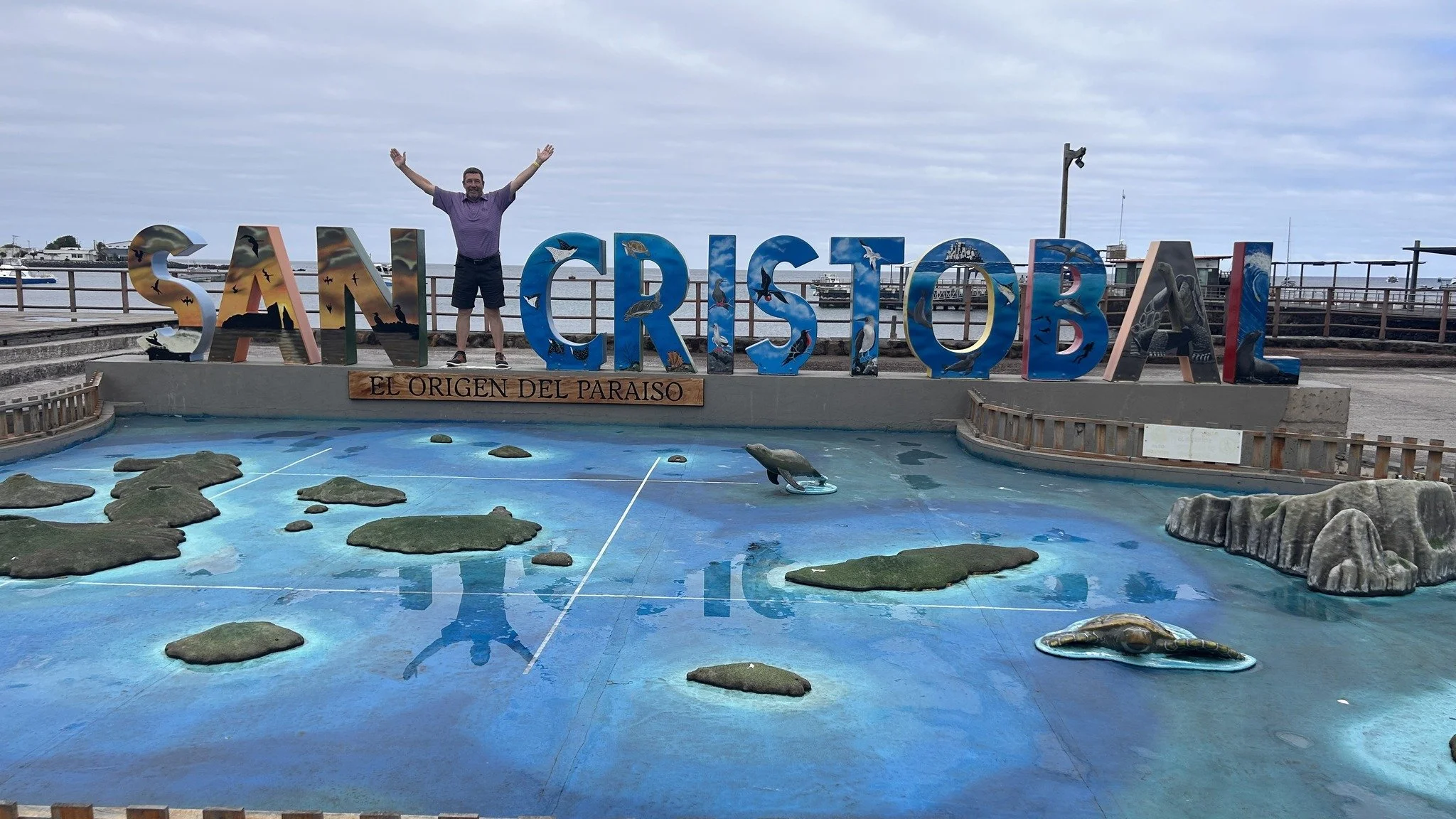
Boxed breakfasts in hand the next day, we shuttled to the Quito airport to fly to Isla San Cristobal in the Galapagos. To say we were excited doesn’t do it justice. This was why we originally booked the trip with Exoticca! Once in San Cristobal (1.5 hour or so flight) we had a short ride to the hotel. The Miconia sits on the waterfront, and somehow, we ended up with best room. We were on the top floor with a stunning waterfront balcony.
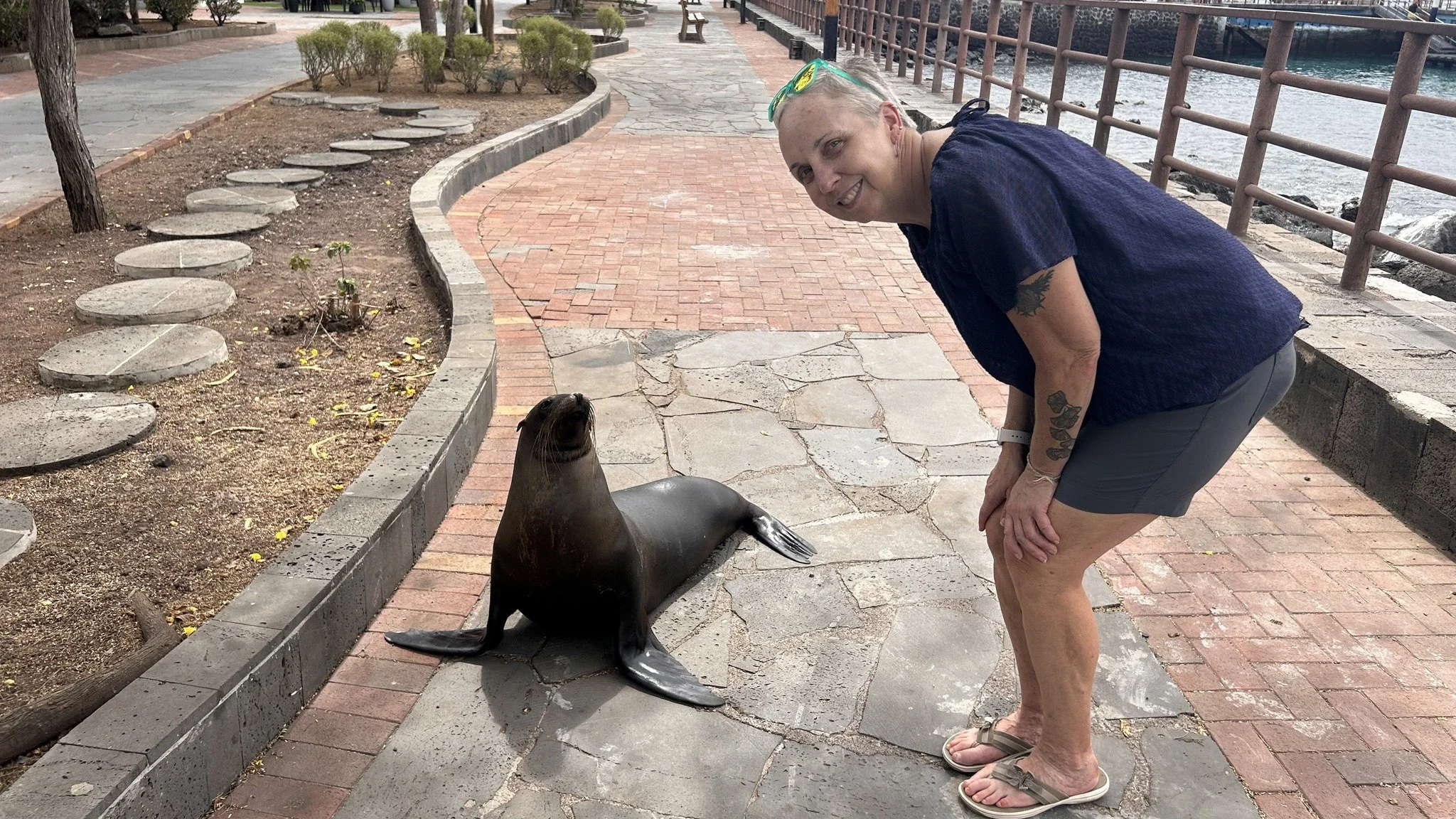
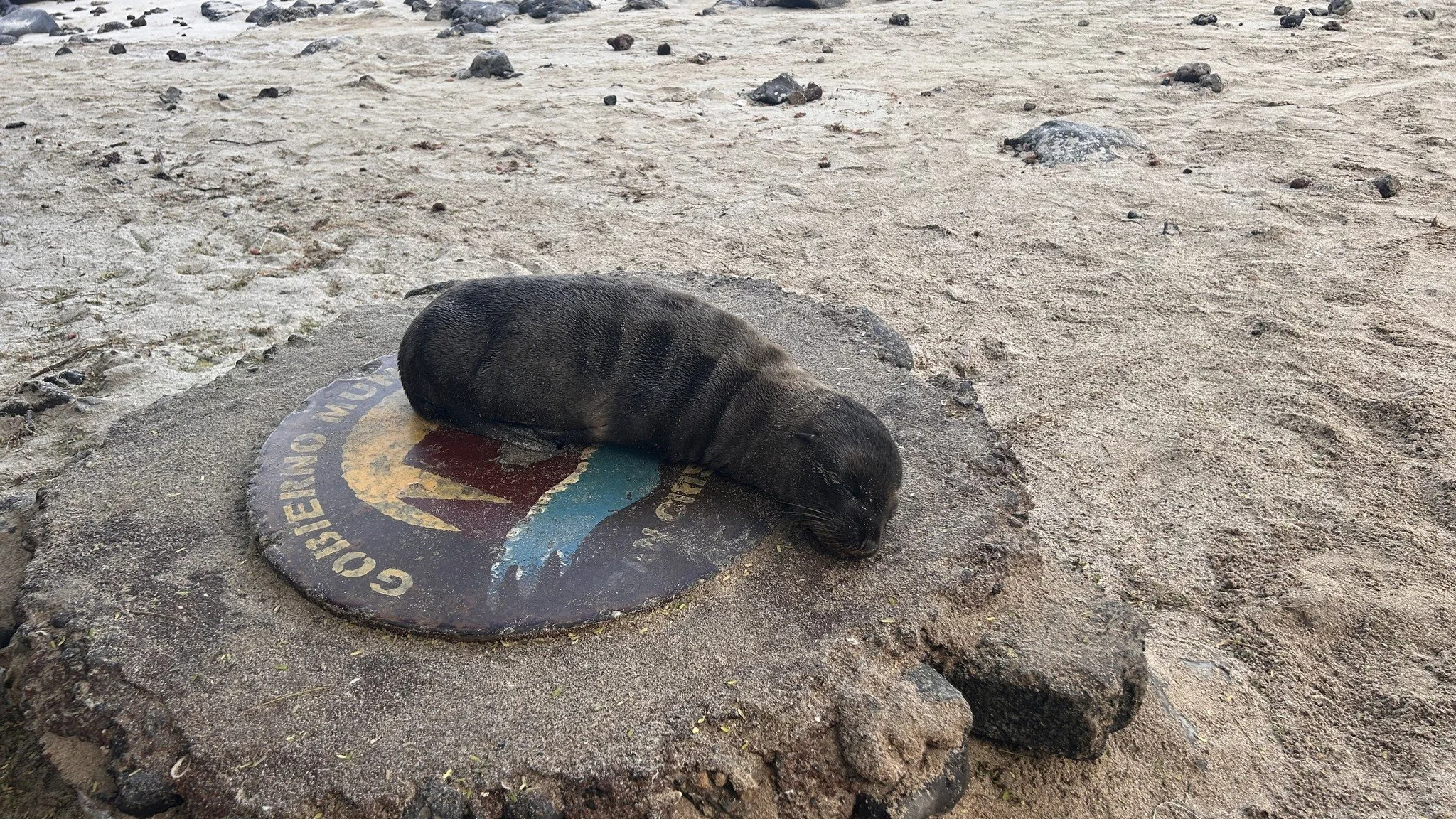
We met our guide for a short walking tour of the waterfront. The first thing we saw outside the hotel was a female sea lion on the sidewalk. We were not in Kansas anymore! We all oohed and aahed until we realized that she was one of, like, a bazillion sea lions there. You literally have to be careful not to trip over them. Even better, it was birthing season, and sea lion pups were abundant and obscenely adorable.
Missy Travel Tip: These are sea lions, not seals. Seals are larger, live in colder climates, and have some physical differences. These creatures could care less about humans, but they keep a close eye on the pups and will let you know if you’re too close. You cannot touch wildlife in the Galapagos, and you'll be fined if police/rangers catch you. Sea lions look like dogs and lounge like cats. We never grew tired of them.
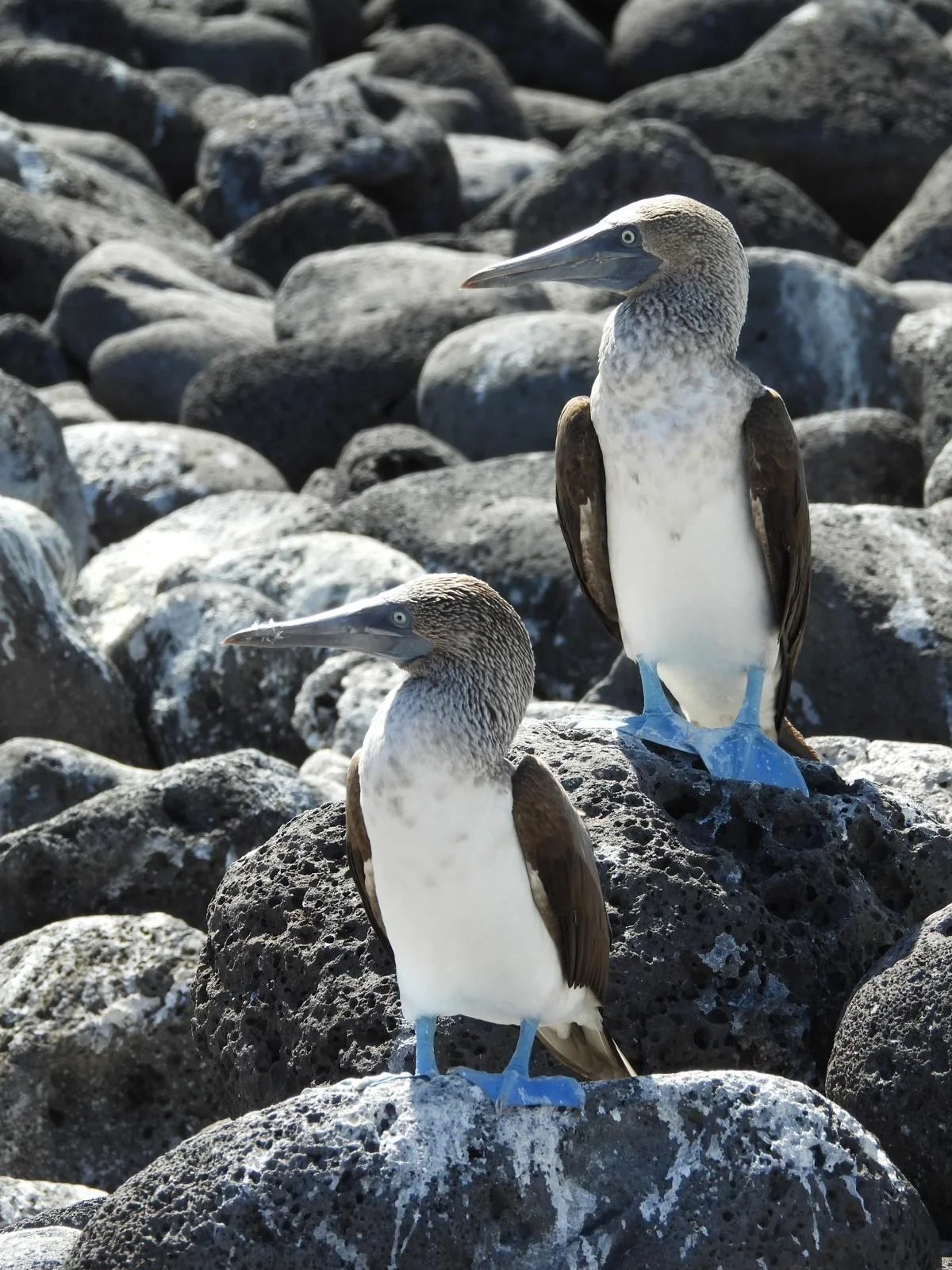
We also saw our first Blue Footed Boobies, which are native to Galapagos. Trust me, you can’t make a joke about their name that one of us hasn’t already said. Just before sunset we went to our balcony and invited our next-door neighbors to join us.
We grabbed a quick dinner then went to bed listening to the sounds of the bay through the screen door. Waking up to a Galapagos sea lion barking is a unique experience! By the way, San Cristobal is the island Charles Darwin arrived on when he traveled to the Galapagos.
The next morning was the big day…the reason we booked the tour of Ecuador. We wanted to experience the legendary giant tortoises!
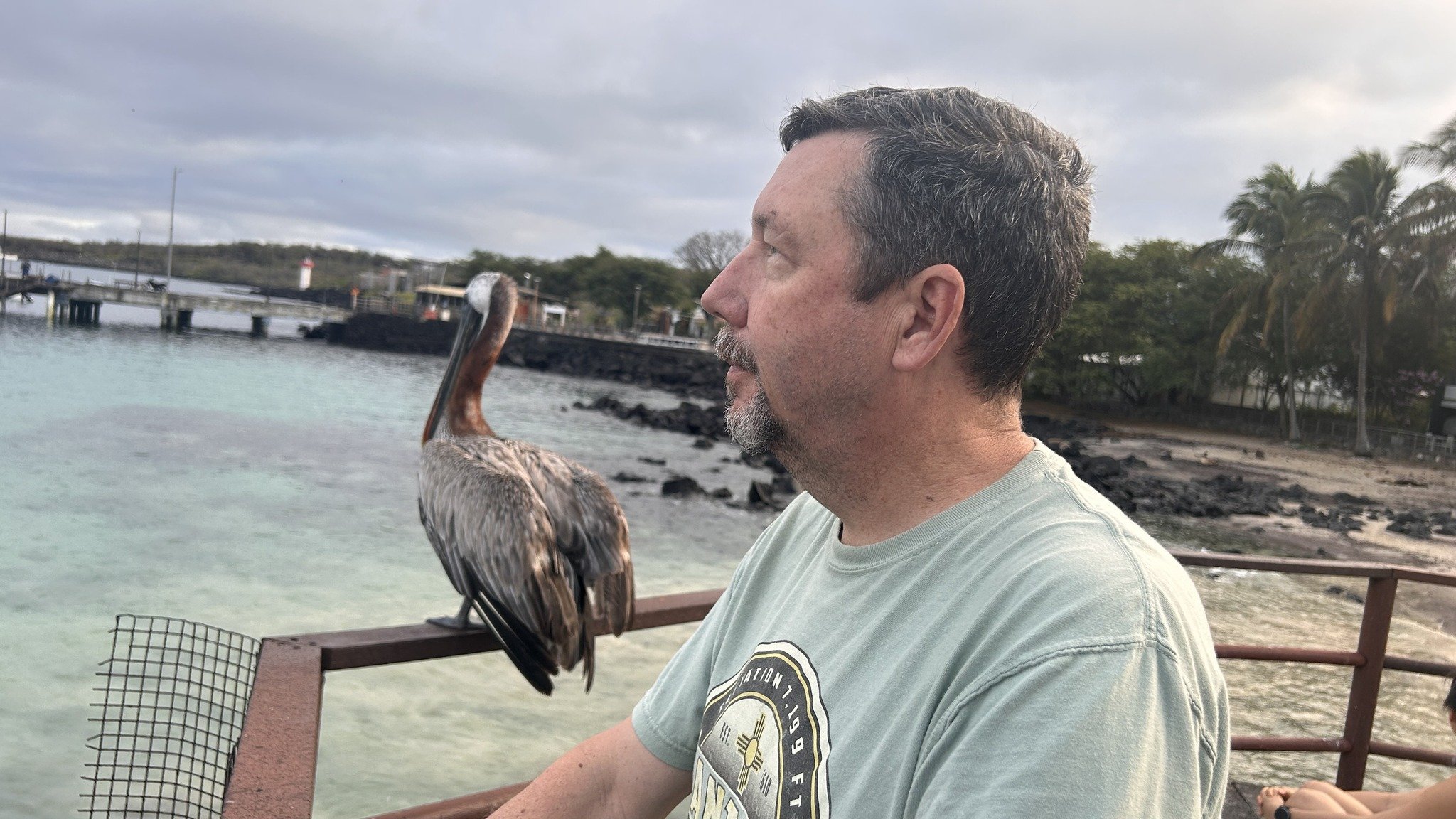
We started the morning hanging out with a chill pelican that my husband named “Bob.” Bob was at the same place every morning. Then we walked along the waterfront to a concrete platform on a pier. As we looked in the water for tropical fish we heard a noise behind us. A sea lion had jumped up to say, “Hi.” I leaned down to talk to her, and the sea lion nearly “booped” my nose with her own.
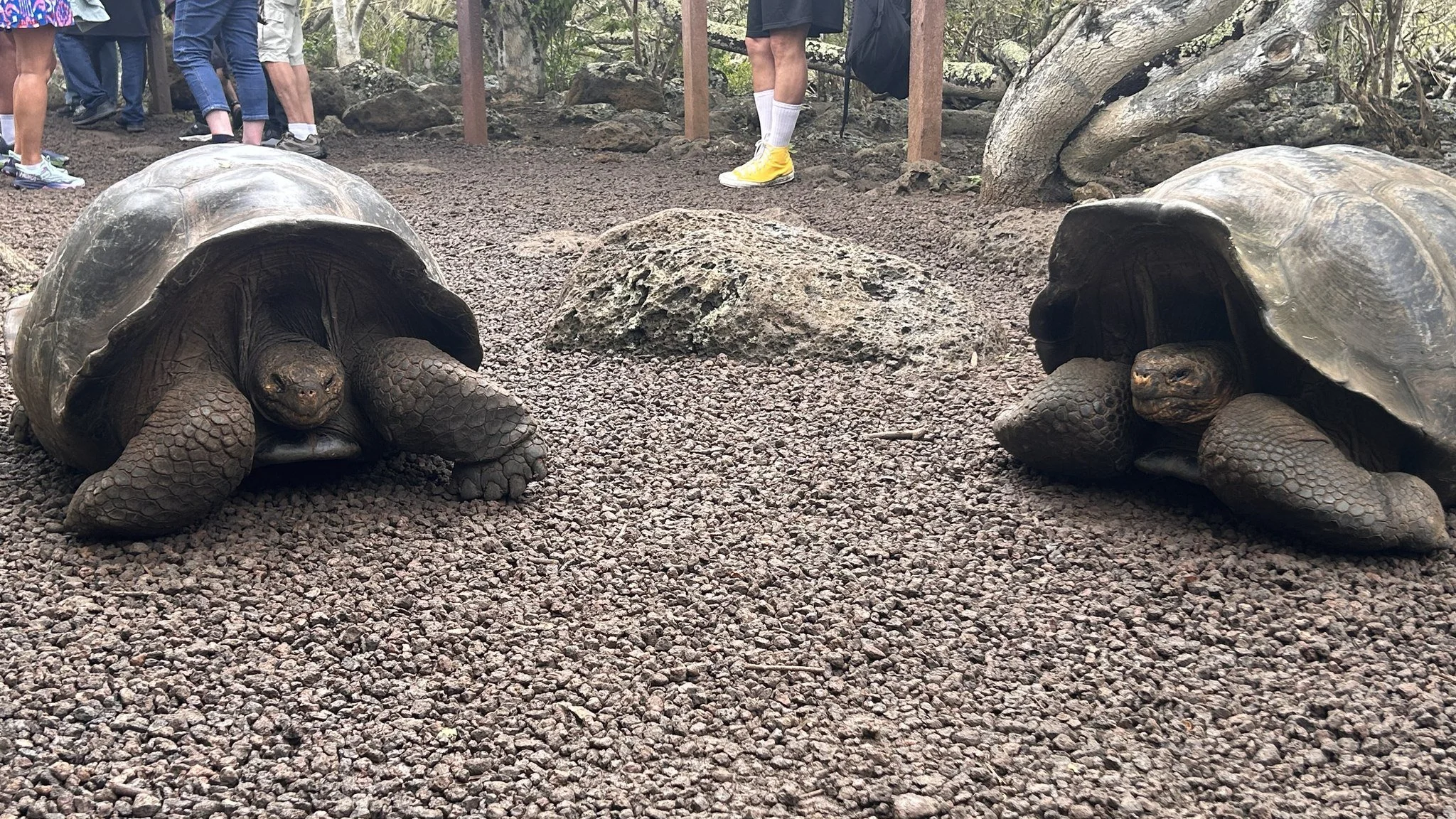
After breakfast, we met our guide and headed through the mountain highlands to the Centro De Crianza De Tortugas Terrestres, a protected giant tortoise sanctuary. After we entered the preserve and started down the path our guide was pointing out giant tortoises to us through the trees. “See?,” she would say, “Way down there!” Yeah…but dang, they were far away. Bummer. Then we turned a corner to where there is a food and water station…and at least eight giant tortoises were there, some right in the path. Like the sea lions, they don’t care about humans as long as you don’t bother them. These creatures, which can weigh 500 pounds and have 300 bones, are amazing. Just walking among them was magical.
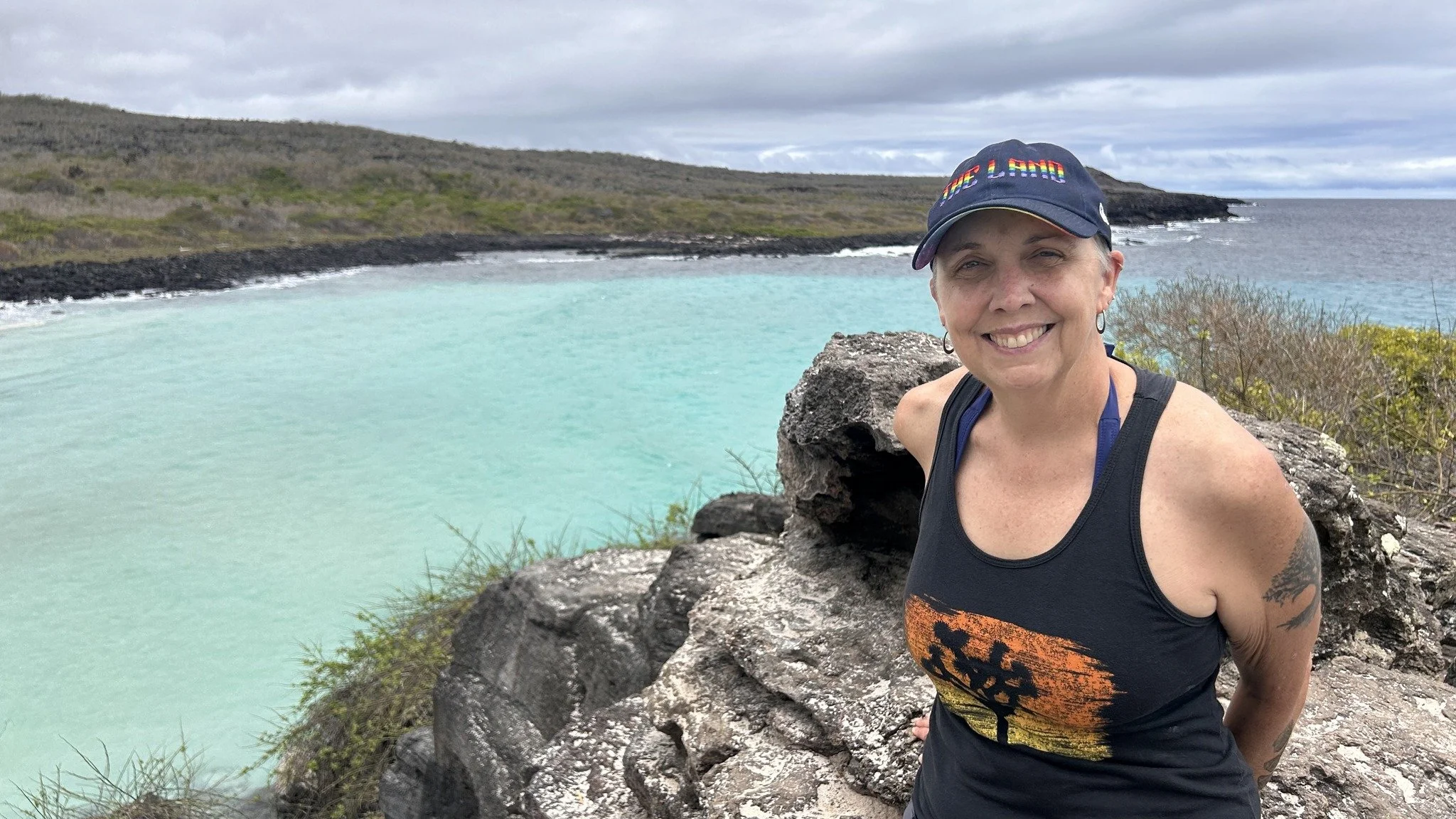
After the giant tortoise sanctuary we visited China Beach to walk on its super-fine white sand. We climbed a small cliff and saw some more Blue Footed Boobies. The water was too cold for most of us, but it was green and gorgeous.
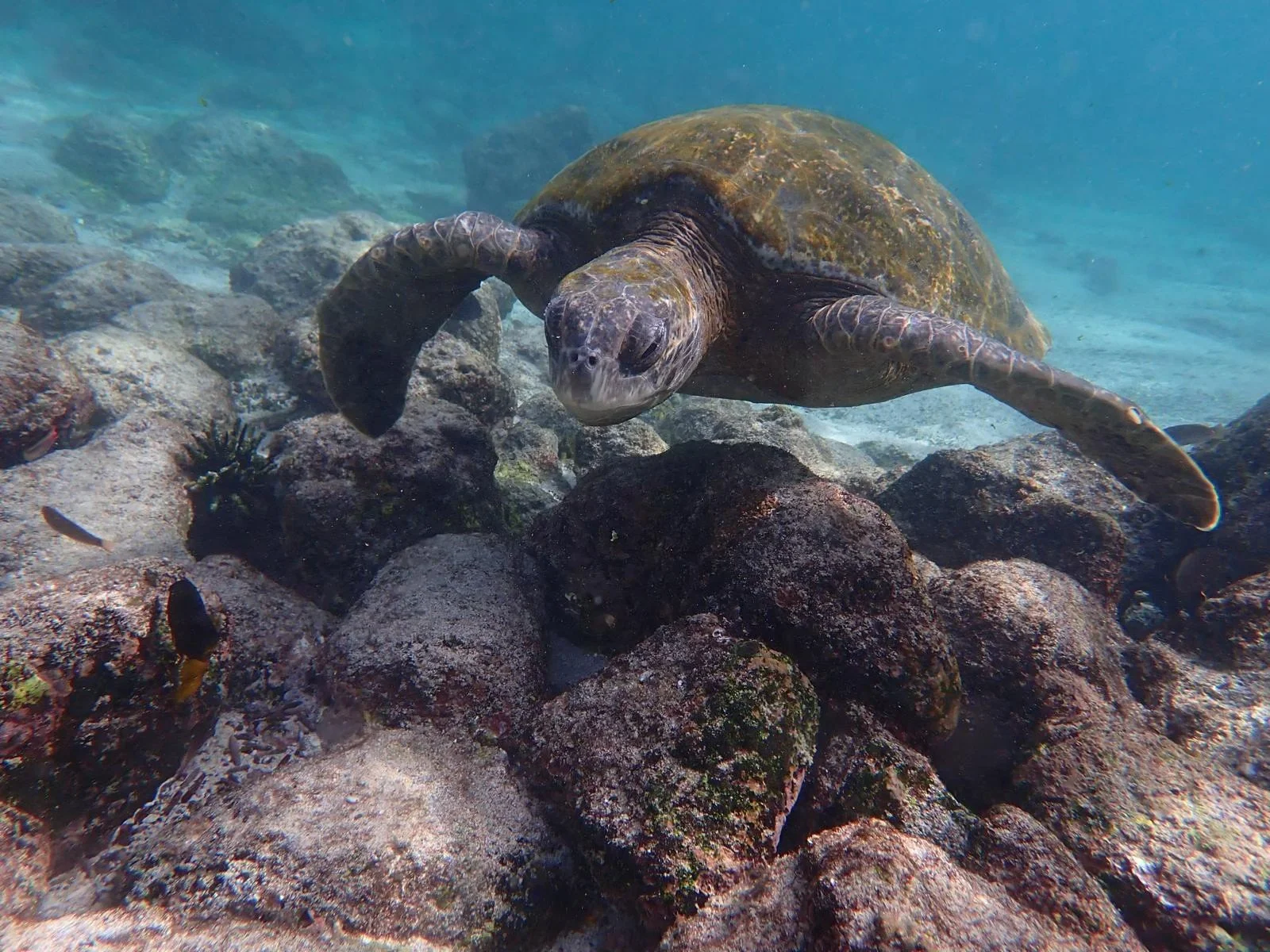
After lunch back in town, we were taken to another cove to look for iguanas and Green Pacific Sea Turtles. The iguanas were shy, but the turtles were not. We spent some time wading in the water with them, which is amazing. A sea turtle bumped Darren aside to get past, and I almost tripped on a sea lion. The sea lions really do blend in when they’ve been rolling in the sand! Did I mention sea lions are everywhere?
We knew we would see more sea turtles the next day because we booked a 360 Tour snorkeling expedition with Eco-Challenger Galapagos leaving early the next day. We planned to make it an early evening, so we had dinner at a waterfront sushi restaurant. Their cocktails were delicious, and my sushi roll may have been the best I’ve ever had.
Breakfast is included at the hotels when you book an Exoticca tour. Some are better than others. The Miconia breakfast was pretty lame, but it came with a good show. The Galapagos have tiny Darwin Finches. The males are bright yellow and the females are brown. Breakfast is on a hotel veranda, and the finches are not shy. They’ll land on the chair beside you and on your table. Do not walk away from your meal! We would toss them bread crumbs and watch the finches happily nibble away.
At 7:20 am we met our excursion guide, Fabo. Fabo is a Galapagos native and a certified wildlife expert, which is required for tour guides. This was called a Tour 360 because you sail the entire way around the Isla San Cristóbal.
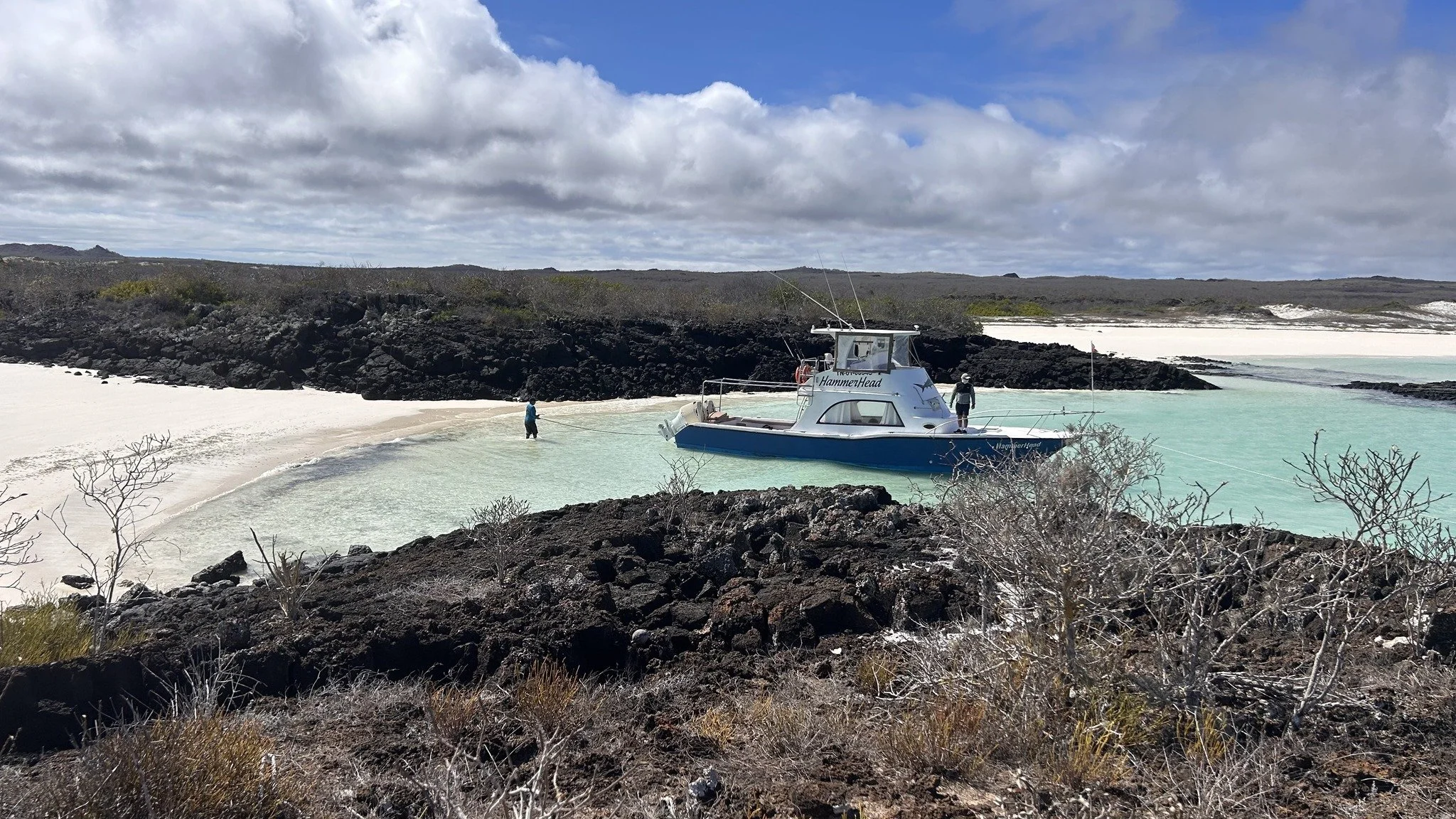
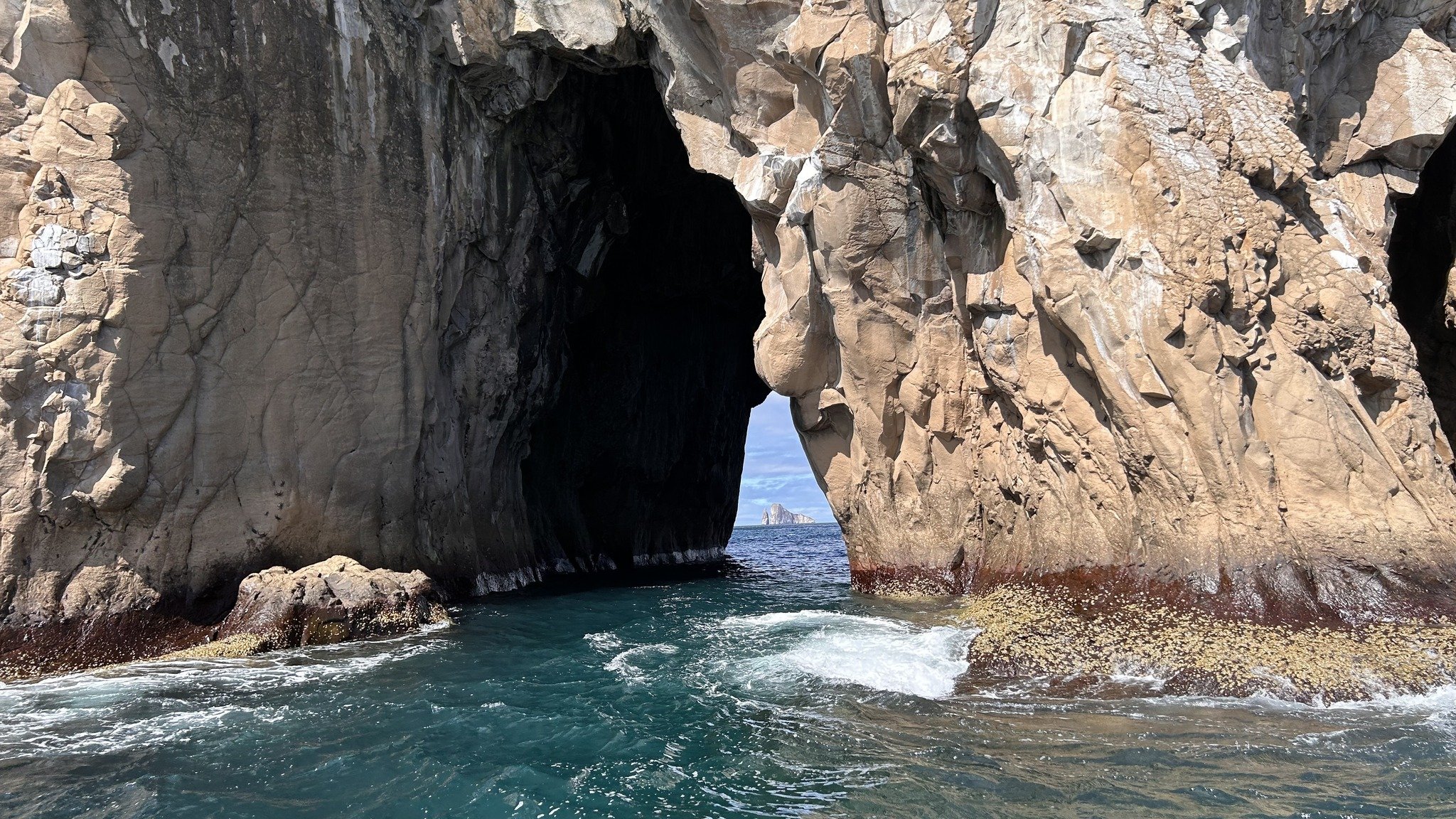
Our first stop was a giant volcanic ash outcrop called Kicker Rock. Our gear included short wetsuits, which was a great call because when we jumped into the water it was…well, let’s call it “brisk.” Almost immediately, we were met by a playful sea lion who nearly bumped into me while swimming past. We continued around the edge of the rock cliff hoping to see a hammerhead shark. We swam a bit with a black-tipped shark ,and we saw lots of fish and some more sea turtles. Alas, no hammerhead.
We continued the trip through the majestic Cerro Brujo and then spent some time snorkeling in Bahia Sardina (Sardine Bay). There were several sea turtles we swimmed with. Our stop for lunch included views of the rarer Red Footed Boobies.
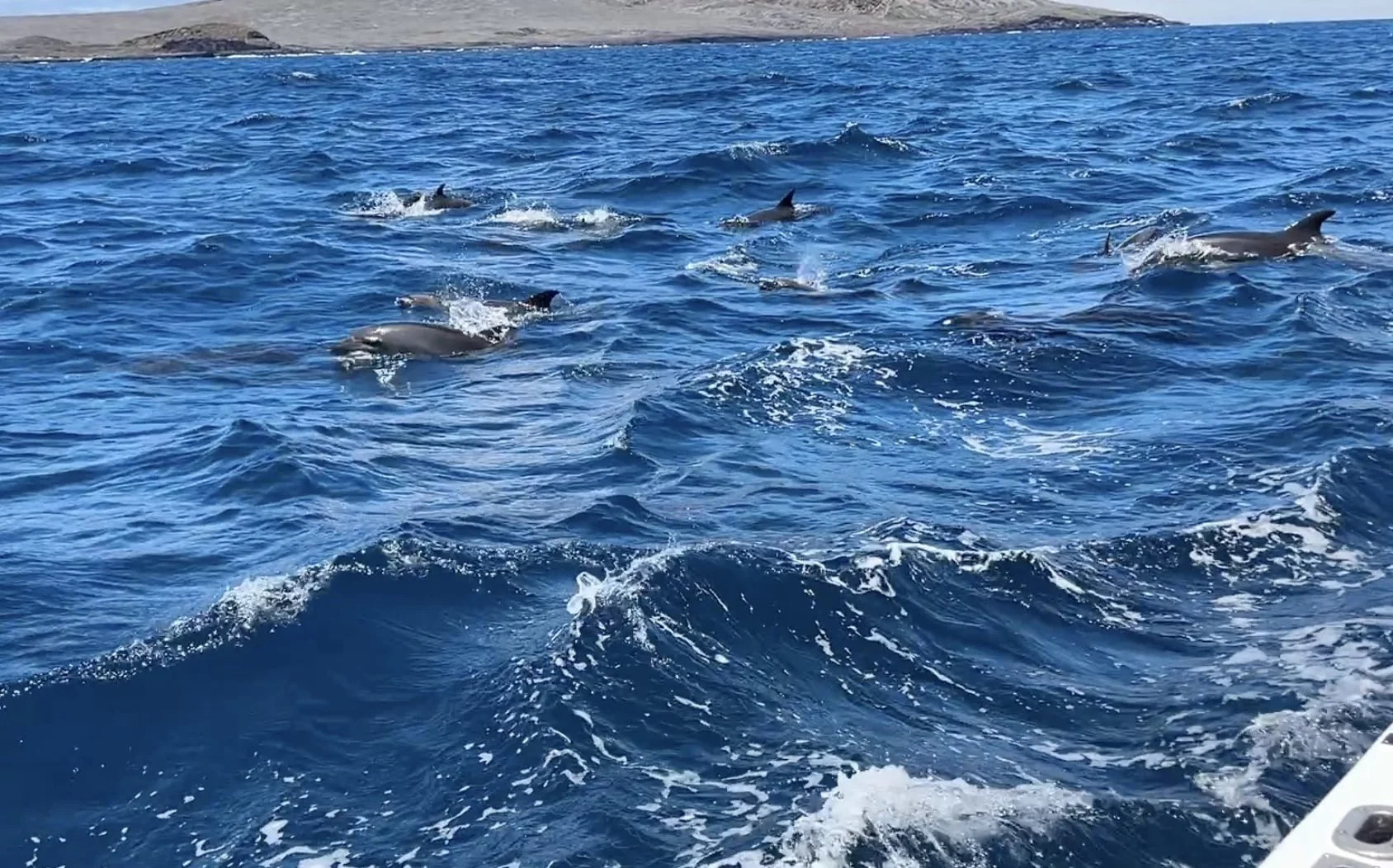
As we made our way to the final snorkeling site, we came upon a pod of dolphins. Not just a few, but dozens! They swam with our boat for quite a while, and it was mesmerizing. Our snorkeling site was Bahia Rosa Blanca, a lagoon sea life can swim into and out of from the ocean. This is where we saw dozens of white tipped sharks nesting together. Again, they don’t care about humans. Darren and I were floating with a huge Brown Pacific Sea Turtle when I tapped Darren and pointed. He turned and an even bigger sea turtle was coming right at him. Darren got flippered. Fabo said we can’t touch them, but they can certainly touch us! We got brushed by more than a few massive sea turtle flippers. We also saw a huge Marbled Ray that caused our guide to let a happy profanity slip. Apparently, this massive dude doesn’t come around much and seeing the ray was a treat.
On the ride back to San Cristobal we came across an even bigger pod of dolphins. These dolphins were all jumping and spinning. We've never seen anything like it. It was a magical day, but we were exhausted.
Another morning of talking to pelicans, visiting with sea lions, feeding finches, and watching giant frigatebirds (which look like pterodactyls) swoop around. I know. Boooring.
Missy Travel Tip: The Galapagos are NOT resort islands. They are national wildlife parks dedicated to protecting these incredible native species. Each is unique with its own special wildlife, and we may have to make a return trip someday. We overheard that one American couple (not in our group) didn’t like Isla San Cristóbal, calling it “scruffy.” Seriously? Did you do your research?! It’s not luxurious, but it’s cozy and ideal for being face-to-face with nature.
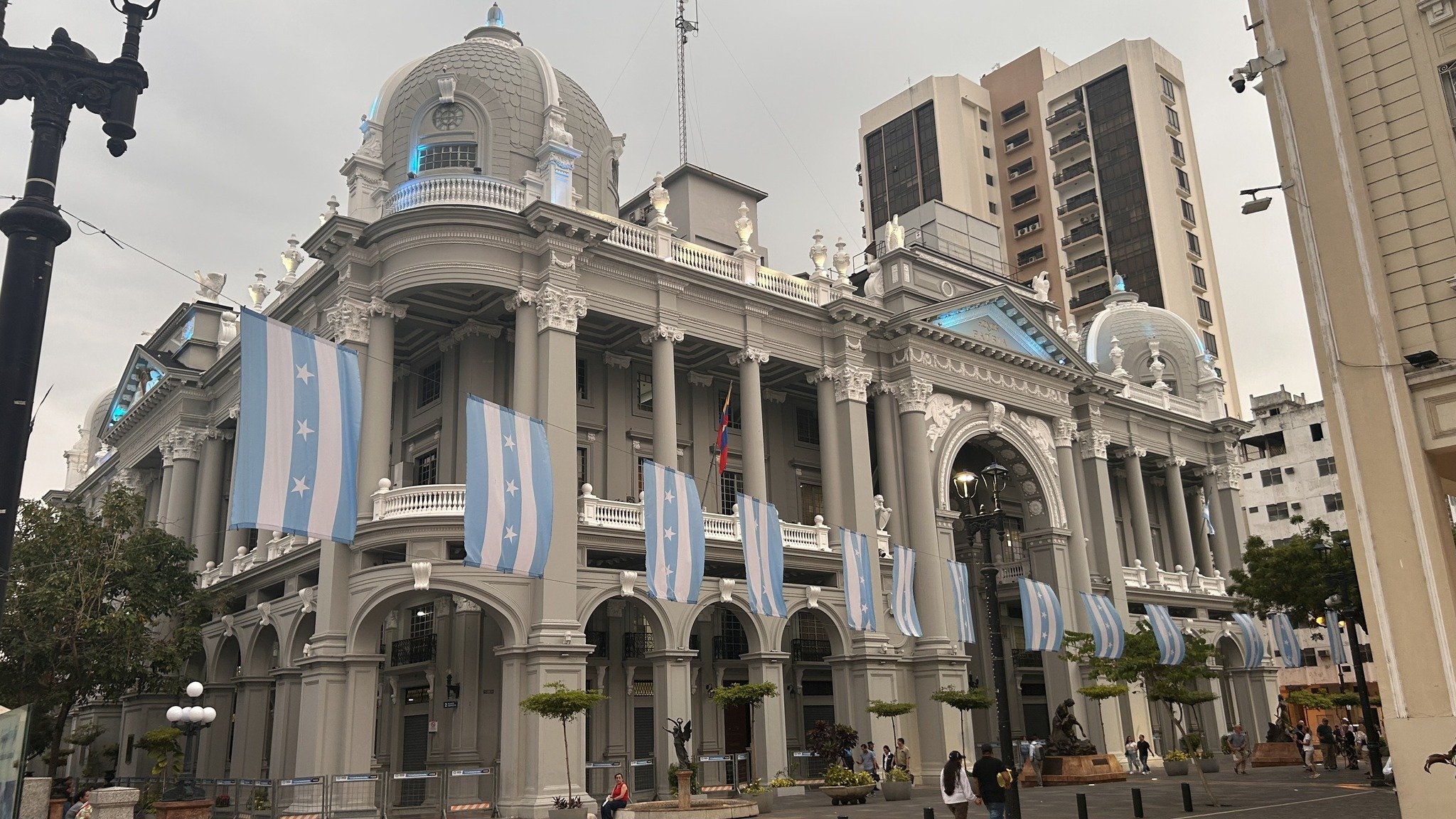
From San Cristobal we flew to Guayaquil, the largest city in Ecuador. After three days in the Galapagos, we were not particularly excited about going back to a major city. We arrived and checked into a really nice DoubleTree by Marriott (warm cookies!) and almost immediately left for a walking tour of the old city. Now let’s put this into perspective: we were all tired, none of us really had lunch (we were at the airport) and no dinner, and it was already after 5 pm. Plus, the tour was listed as three hours! We considered skipping it, but when would we be back in Guayaquil? So off we went.
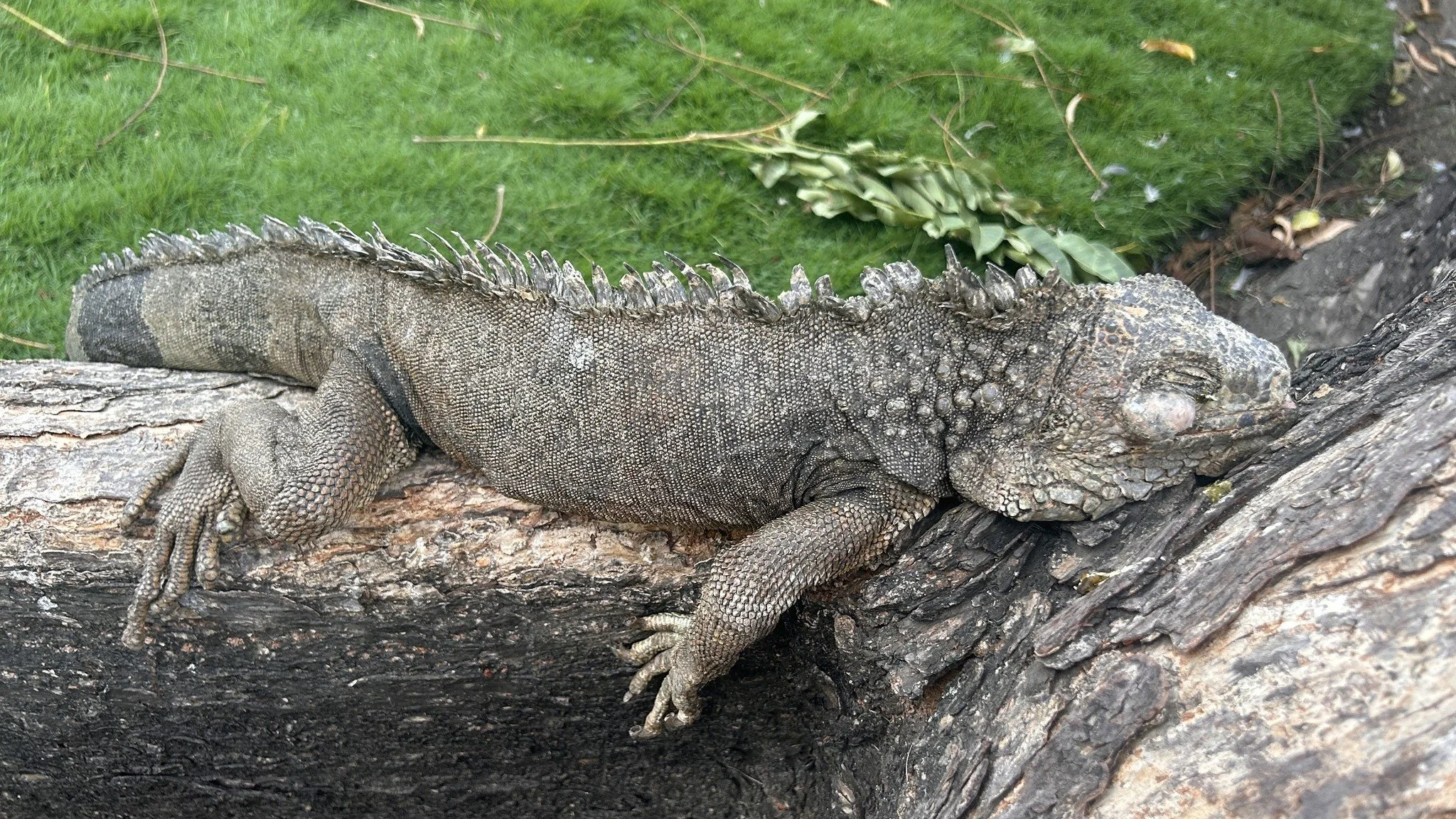
We took a short bus ride to Seminario Park, better known as Iguana Park. It’s home to an estimated 160 iguanas. It was getting late and most of the iguanas had already climbed into their trees, but there were still a few lingering about. What’s interesting is the iguanas know they have a good thing going and never leave the park!
We stopped into a large Catholic church that had been rebuilt after a devastating fire in 1896 and an earthquake took down one of its spires in the 1980s. Then we walked toward the Río Guayas, a brackish river that’s a tide mix of fresh and salt water. After a pleasant stroll on the charming riverwalk, we ended up in the oldest standing part of Guayaquil, which survived the late 1800s fire that destroyed most of the city.
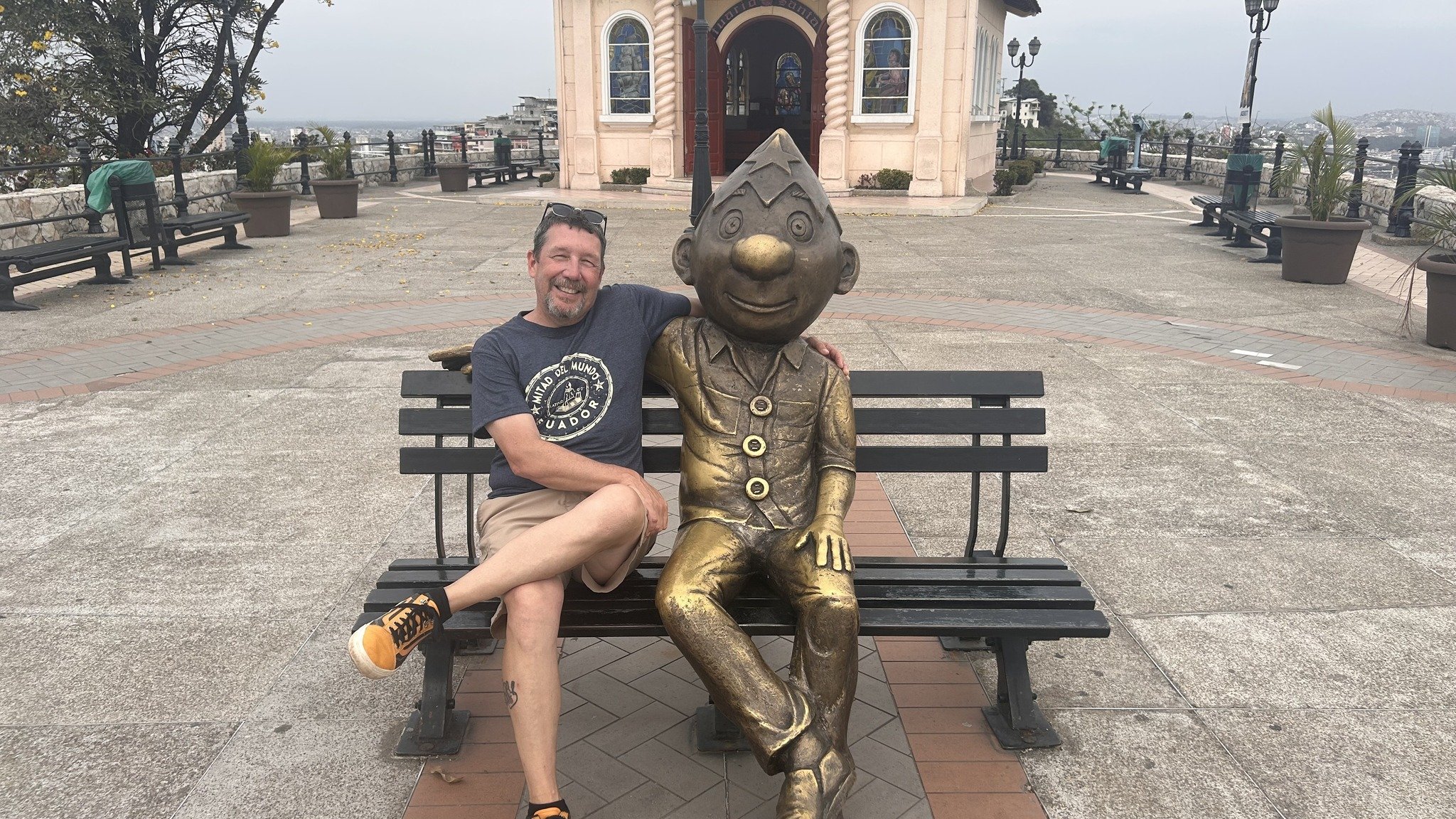
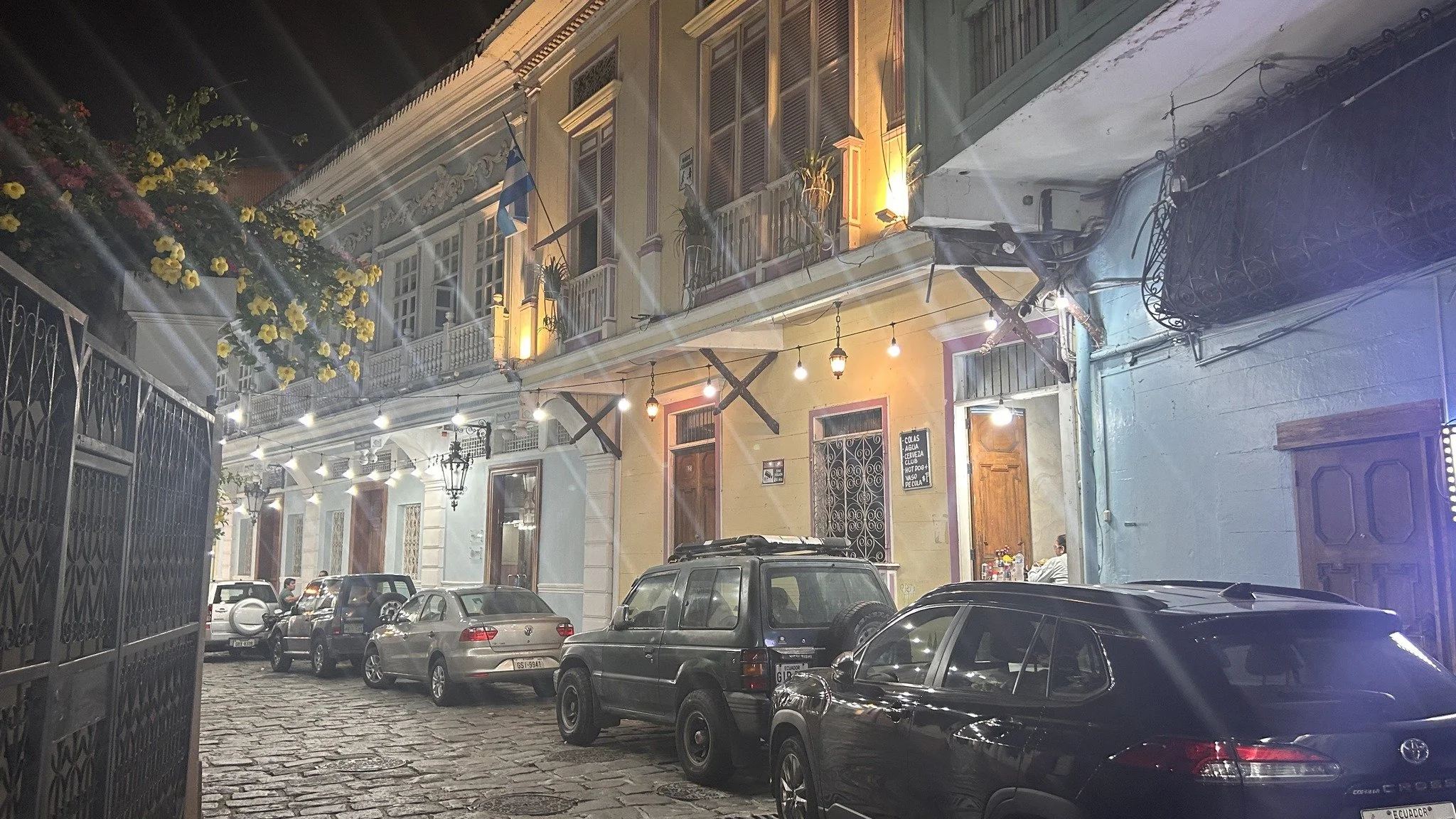
The old town of Santa Ana Hill has European charm, and its buildings line a cobblestone street strung with lanterns. The hill is topped by a lighthouse ,which we planned to visit the next day. The tour did NOT take three hours.
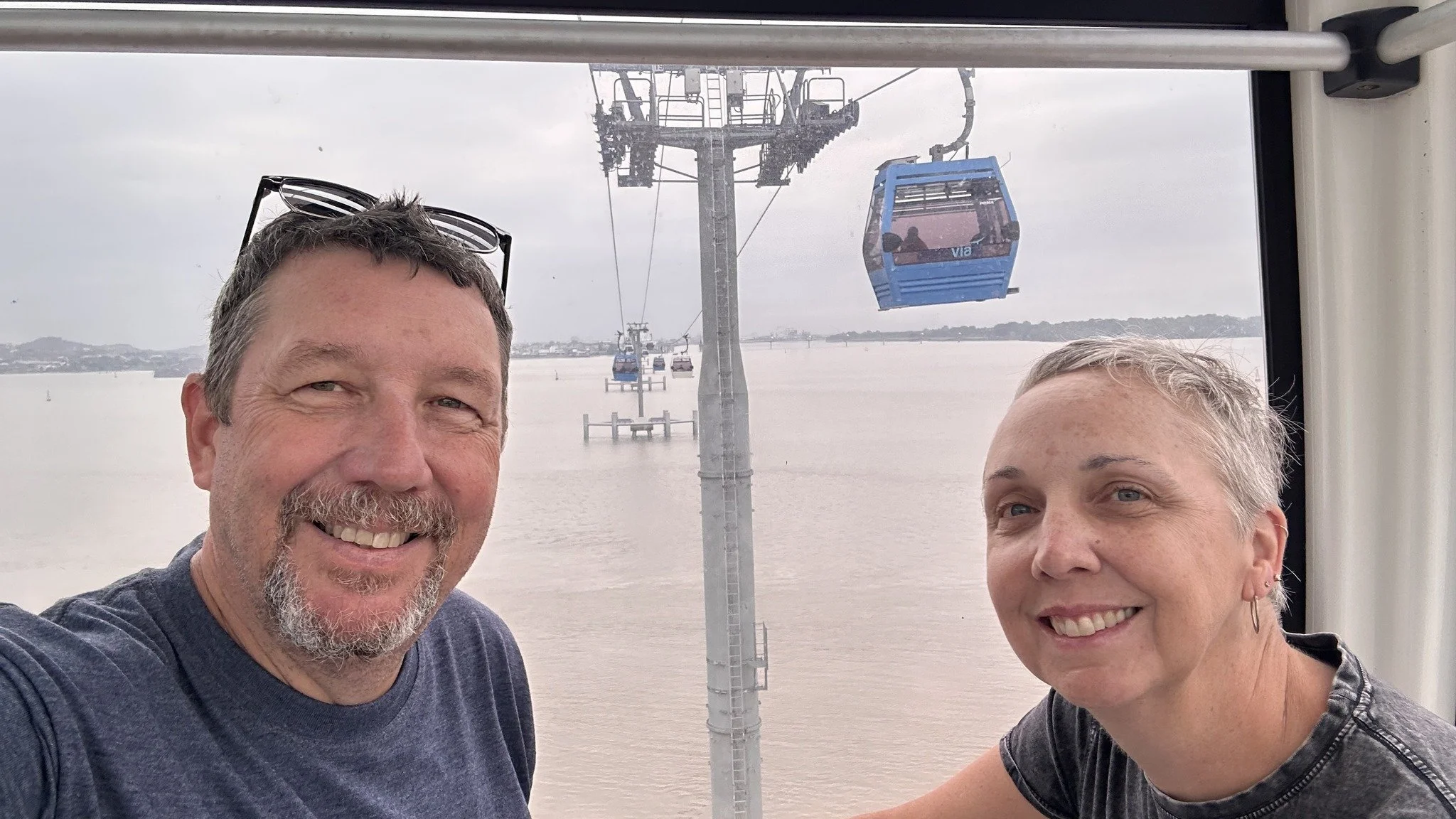
In the morning, we did our own walking tour. We started by taking the relatively new Guayaquil Aerovia cable car, a main mode of transit in the city. For $4, you can ride across the Rio Guayas and then miles into and through the city. Built between 2018 and 2021, it has 154 cabins each with a capacity for ten passengers. Going from one terminal station to the other takes 17 minutes, so it’s a nice half-hour plus ride and a unique way to see Guayaquil. After, we visited the old lighthouse. There are 444 numbered steps to the top of Cerro Santa Ana. The cobblestone stairway winds through the Las Peñas neighborhood and has rest stops and viewpoints along the way. We went all the way to the top of the lighthouse. Great views! There was also a fun outdoor ship/fort museum.
It has been a VERY active vacation, so we opted to spend a relaxing afternoon at the hotel’s 18th floor infinity pool. For dinner, we walked back to the Las Peñas neighborhood to eat at Andes Brewing, a local brewpub. We had an outstanding duble and red ale. Guayaquil, like the rest of the trip, exceeded our expectations. Sadly, this was our last full day in Ecuador.
We would not be picked up for the airport until 4:30 pm, so we had some additional time left to explore. We started at the Nacional Museum de Cocoa. Yes…a chocolate museum! It was really well done, exploring the history of the cocoa bean in Ecuador from ancient times through modern chocolate making. English audio devices helped a lot.
Being Saturday, the museum’s rooftop restaurant bar was open early, so we got brunch beverages. Darren and I had Cocoa Old fashioneds that were just incredible. They even came with a hat and brown sugar “cigarette.” Classy!
The next stop was a sprawling market of souvenirs and homemade goods. We did some last-minute shopping and then had lunch at a Chinese restaurant we stumbled into. We then walked back to Iguana Park. Talk about a difference from the other evening! There were huge iguanas everywhere; it was like watching miniature dinosaurs stomp around.
Darren and I cannot recommend Ecuador enough, especially the Exoticca tour. It was like three different vacations: old cities, the Amazon rain forest, and the Galapagos Islands.
Missy Travel Tips: The west coasts Ecuador and Peru are almost directly south of our home in Cleveland, so jet-lag is not an issue. We were also surprised to learn Ecuador uses American dollars. Hit the ATM ahead of your travel. Meals, beverages, clothes, etc, are generally less expensive than in the U.S. because the annual salary of an average Ecuadorian is significantly lower than that in America. Also, Google Translate is amazing. If you’ve used it, you understand.
Other than The Galapagos, I don’t think Americans really see Ecuador as a tourism destination. It is a spectacularly beautiful country, and at no time did we feel unsafe. However, our guide told us that government corruption is common, which can lead to infrastructure issues. If you want job security, join the landslide road repair crew for the highway over the Andes. Yes, there are drug cartels, but they’re not interested in bothering tourists. Exoticca would not have its travelers in unsafe areas. That’s bad for tourism and Trip Advisor reviews.
Much of the water for consumption in Ecuador comes from glaciers. Due to global warming, those are starting to disappear. You should not drink the tap water, but you can use it for showers, washing hands, and brushing teeth. If you want water at dinner, you have to purchase it. Oh, and you do NOT flush toilet paper. That takes some time to get used to.