Spain: Old World Treasures
When my husband, Darren, was in high school, his Spanish class took a trip to Spain. When I suggested a trip to Spain, Darren was all for it. “I was 17 the last time I was there,“ he said. “I was probably more interested in the girls on our trip than the culture.”
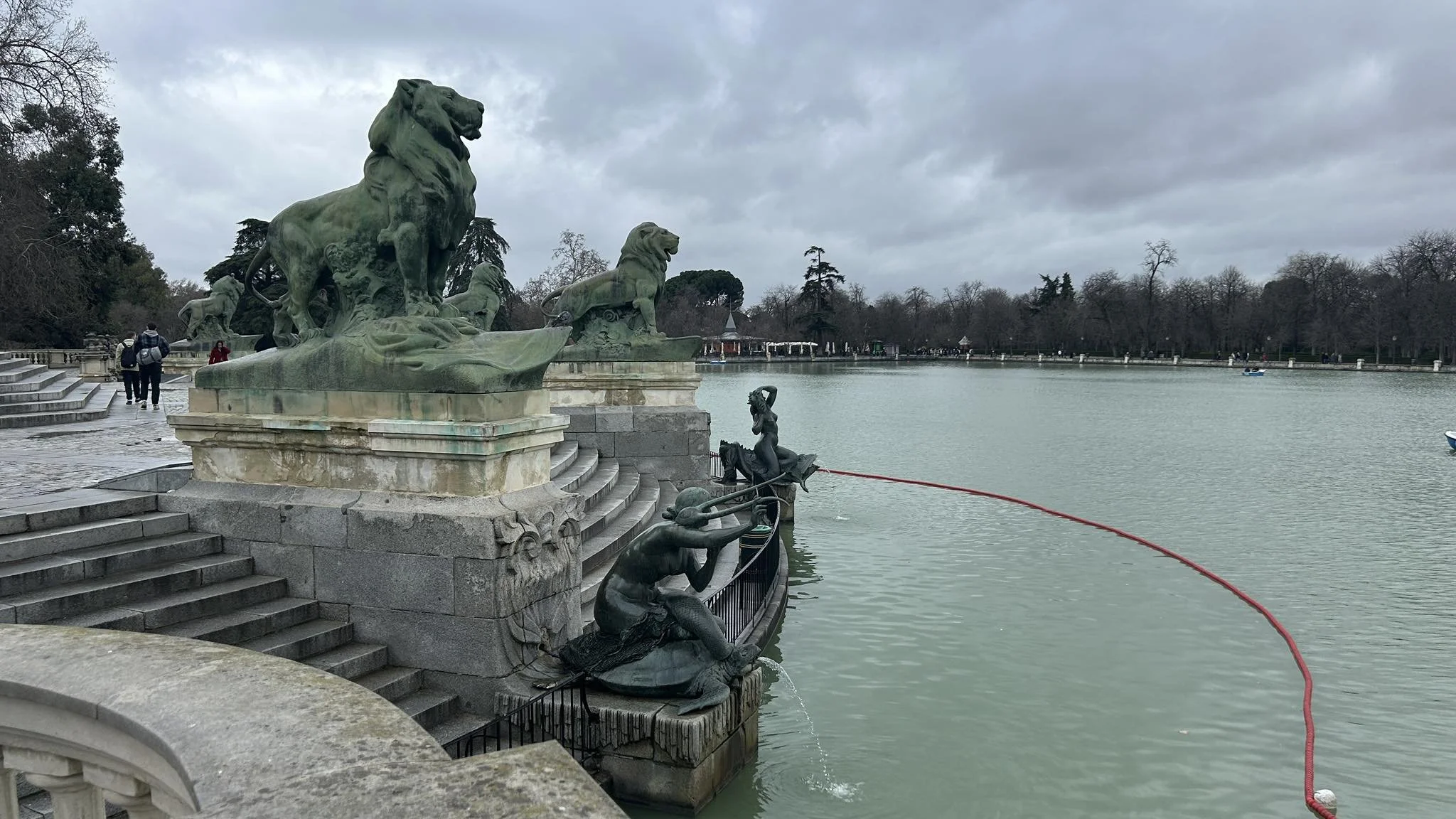
Once again, we booked our tour through Exoticca after two successful previous trips to Portugal and Peru. Our red-eye landed in Madrid, and we were taken to our hotel just a few blocks from the historic Las Ventas Bullring & Museum. With an entire day on our own, we decided to walk to the Prado Museum, which was not on our tour itinerary. We decided to cut through the beautiful Parque del Retiro, a massive public park complete with lagoon. Darren even recognized the lagoon from his visit to Madrid in the early 1980s. The park is big with so many winding paths; we got turned around and exited much farther from the Prado than we anticipated.
Missy Travel Tip: Bring two pairs of lightweight, comfortable shoes. Shoes take up the most space in a suitcase or backpack, so limit yourself to essentials. If you’re like us, you’ll walk a lot, and your feet will thank you at the end of the day. We often get 20,000 steps per day on trips.
The line to enter the Prado was long but moved quickly. Pictures are not allowed inside as Darren quickly learned. The Museo del Prado houses collections of European art dating from the 12th century to the early 20th century and boasts the single best collection of Spanish art. There are numerous works by Francisco Goya, Hieronymus Bosch, El Greco, Peter Paul Rubens, Titian, and Diego Velázquez. Darren did note there were a lot of portraits. A LOT. In fact, we didn’t even see everything because the complex is so massive. Eventually, hunger chased us out, and we hunted for a good vegetarian restaurant. We found one near the The Puerta de Alcalá, Madrid’s iconic gate leading to the Plaza de la Independencia. After dinner, we walked back to the hotel for a bottle of wine. Had we known at the time how good the Madrid subway system was, we would have taken it.
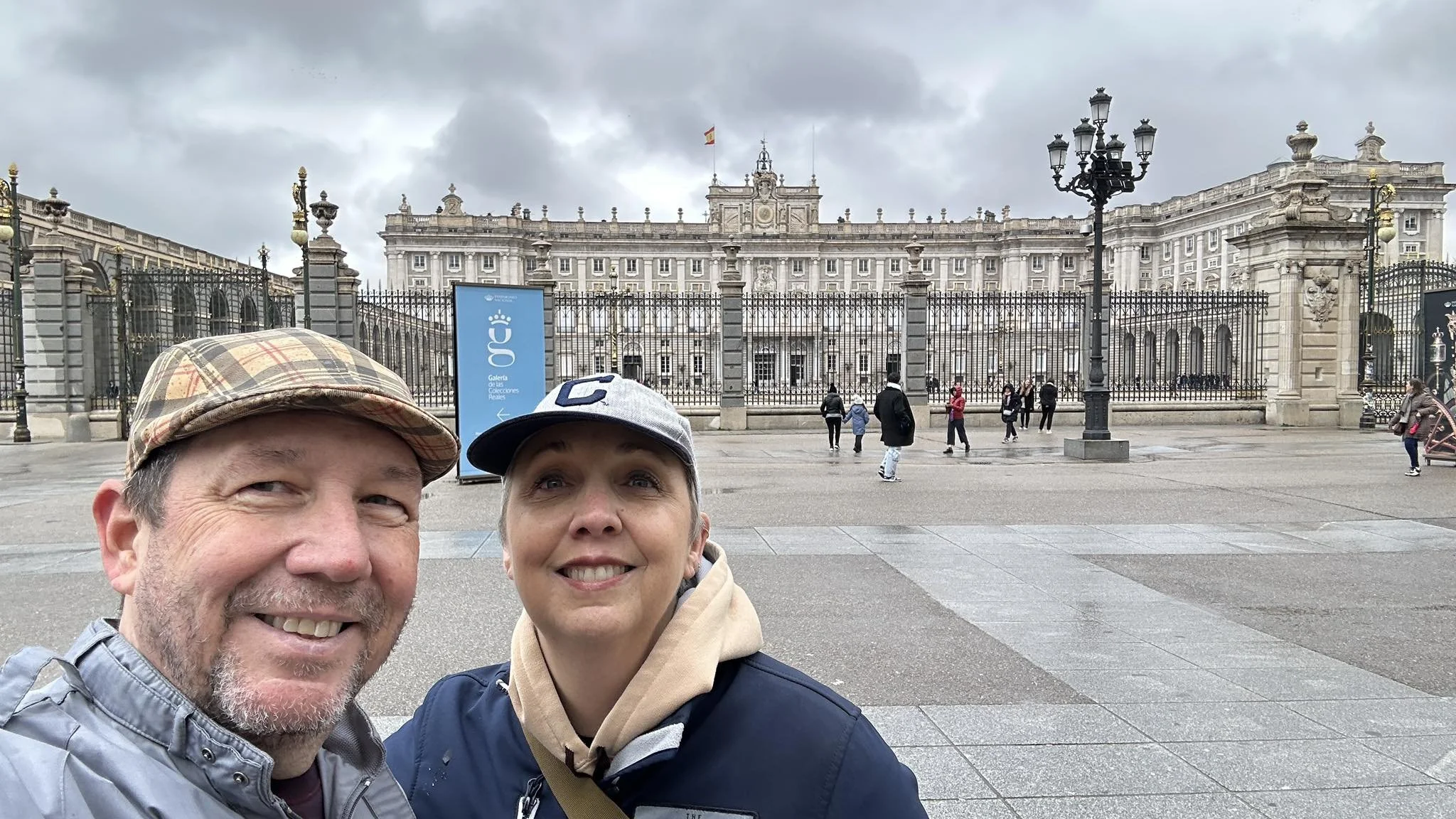
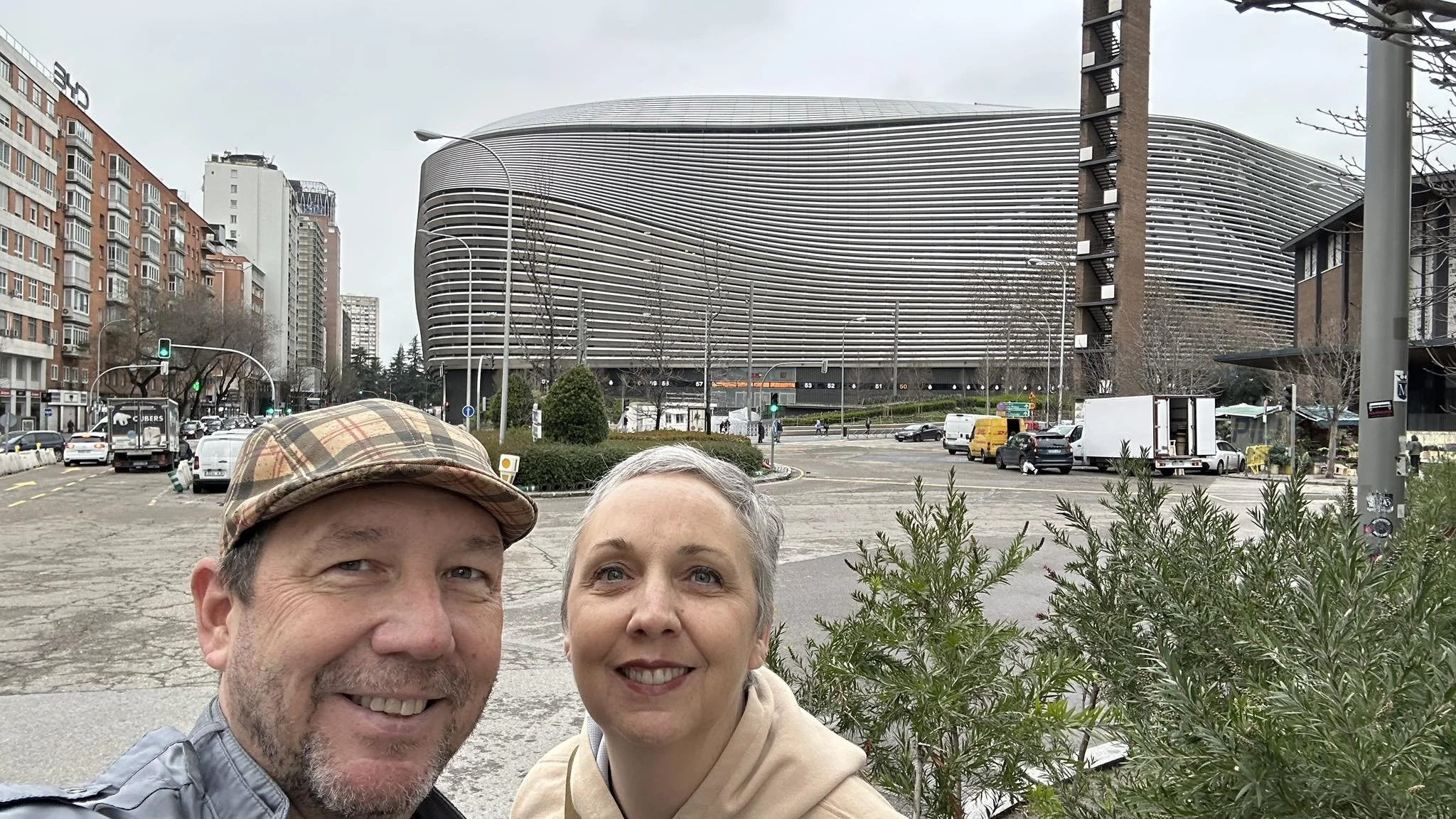
The next morning, we met our traveling companions and got a bus tour of Madrid, including a stop at the amazing Bernabéu Stadium, home to the Real Madrid football (soccer) team. We got off the bus at the Royal Palace and began our walking tour of the Plaza Mayor, the Puerta del Sol, and the Plaza de España. For lunch, we found a tapas bar down an alley off the Plaza Mayor and had the best hummus we have ever tasted. Seriously. We’ll be chasing that hummus the rest of our lives.
Instead of going back to the hotel, we went to the Las Ventas Bullring & Museum, which is well worth the visit. To be clear, neither Darren nor I are interested or condone bullfighting. In fact, Spain and Mexico are moving away from the sport. However, the bullring is a 100+-year-old architectural masterpiece, and it was interesting to learn about the sport. Bullfights are still held there, but concerts are also staged there ranging from The Beatles, to AC/DC, to the symphony.
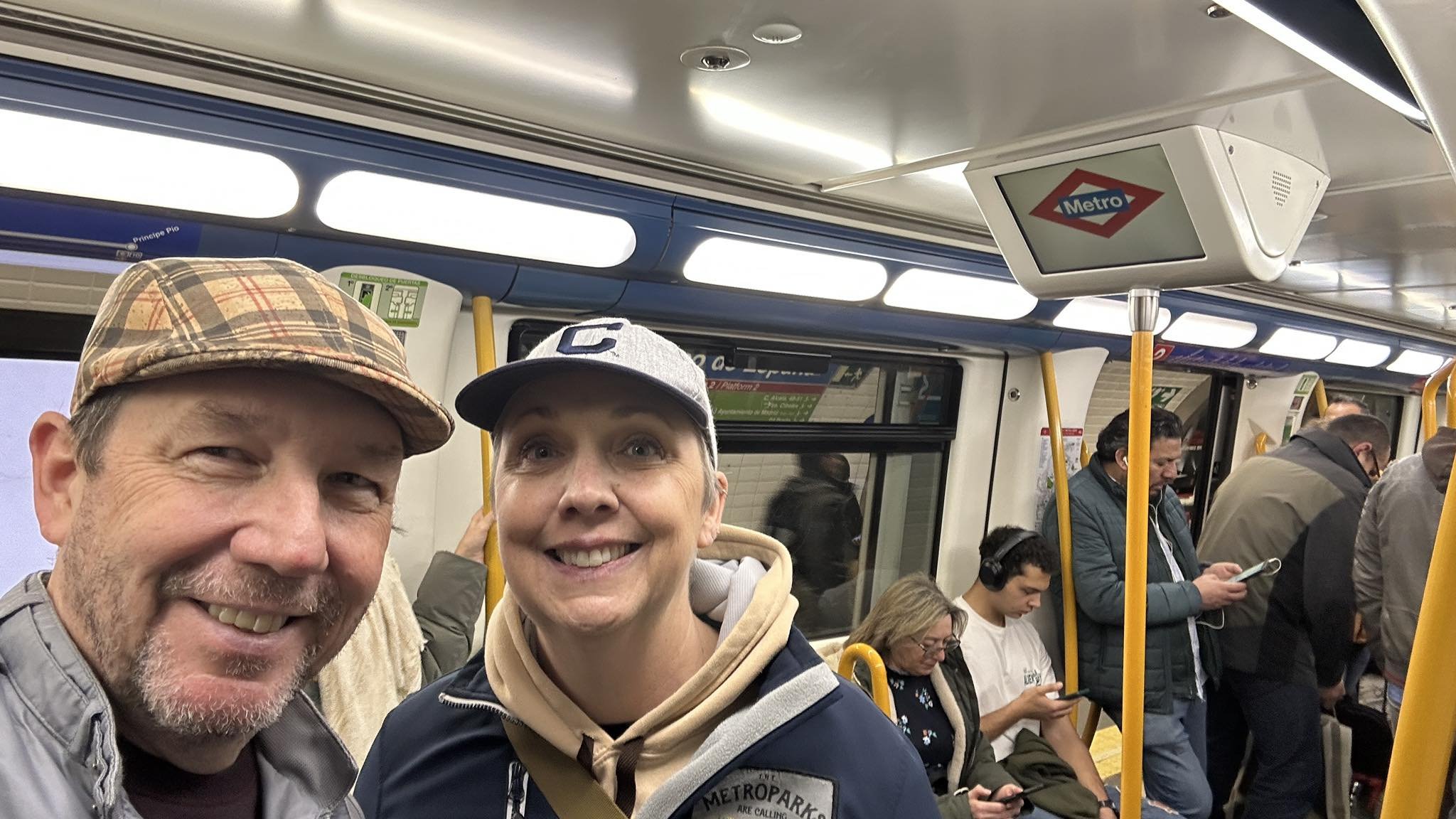
Back to our hotel we asked the desk if there was a good rooftop bar, but it was back where we had been earlier in the day. This is when we learned how good the Madrid subway really is. We returned to the Puerta del Sol and found a food court at the top of the El Corte Inglés department store. We had terrific pad Thai and a stunning sunset after a somewhat drizzly day. We had drinks at a boutique hotel bar and hopped the subway back to the hotel. Our stay in Madrid was way too short.
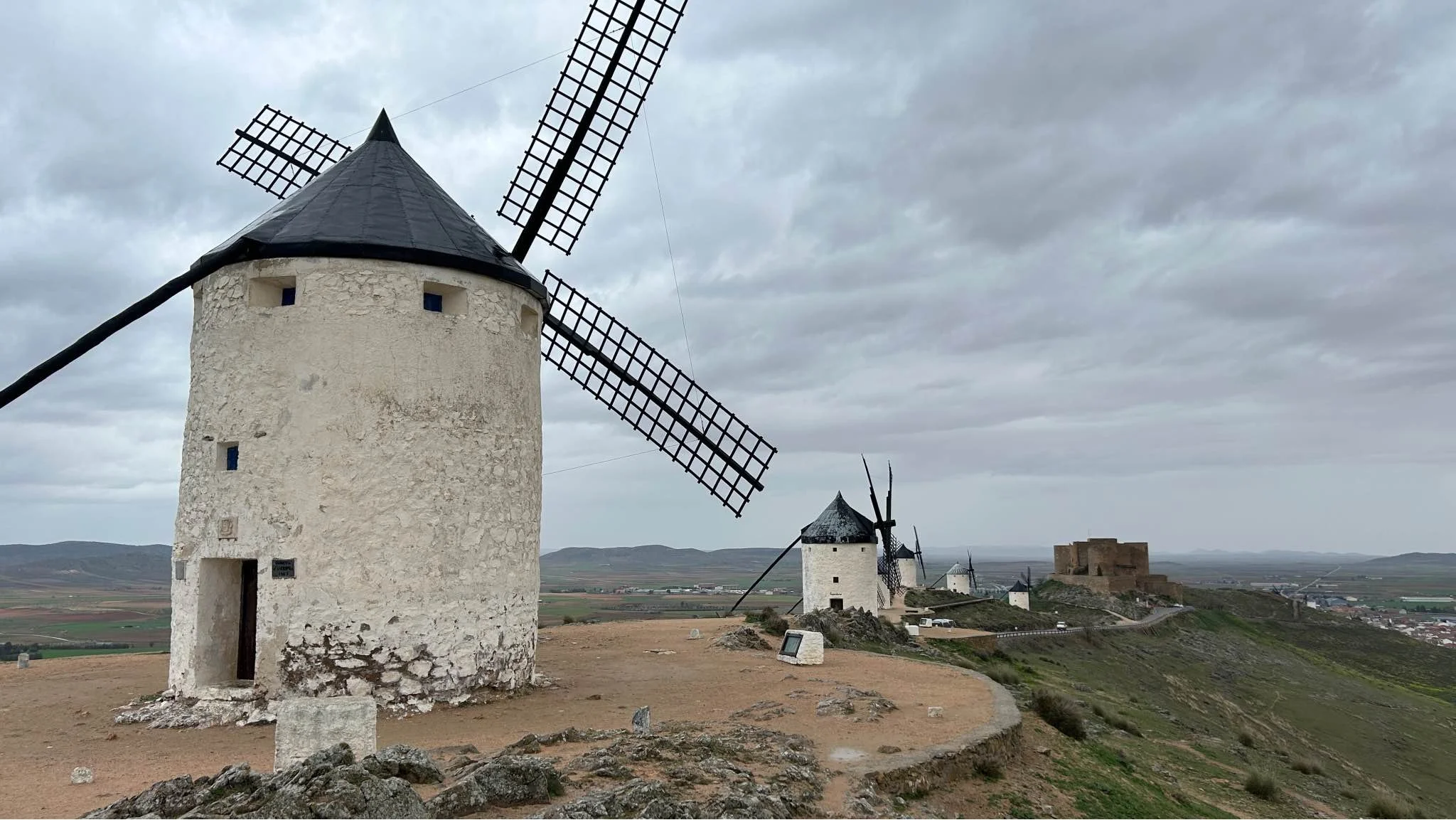
The next morning we boarded a bus heading to Seville with several stops on the way. First was Consuegra, a village full of windmills famous for its connection to Don Quixote. It was windy but with sweeping views of the plains below.
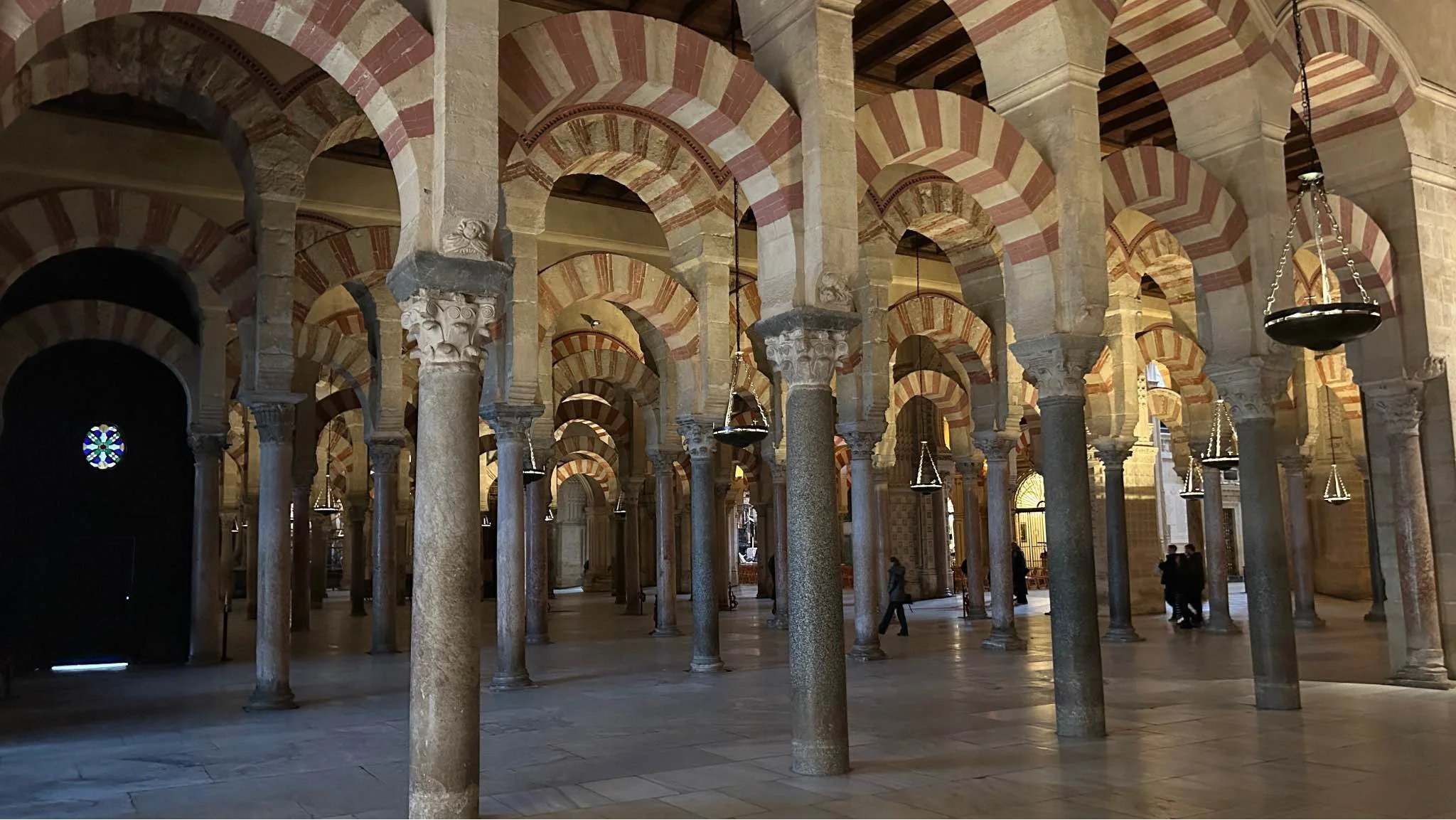
We crossed the border into the Andalusia region and stopped in Córdoba, a city rich in Islamic history. We toured the incredible Mosque of Córdoba, whose inner sanctuary is famous for being supported by 850 columns. It’s now a Catholic church, but the retained the mosque design and architecture. It’s hard to explain how amazing it is.
We crossed the famed Roman Bridge, walked through the Puerta del Puente, the Triumph of Saint Raphael, and visited the narrow streets of the Jewish quarter, La Judería. Again, our stay was brief but memorable.
Missy Travel Tip: I would love to help you book tours with Exoticca, but you do need to understand these are what Darren and I call affordable “sampler trips.” It’s a tourist’s variety box of chocolates. You will visit some places and wish you had more time there. On the other hand, you will get to see more locations than just one city and hopefully want to plan a longer return trip to your favorite locations.
In the afternoon, we continued to Seville, well-known for its legendary tapas and flamenco. We arrived after dark and ate at a restaurant connected to the hotel…after we picked up a nice bottle of local wine for the room.
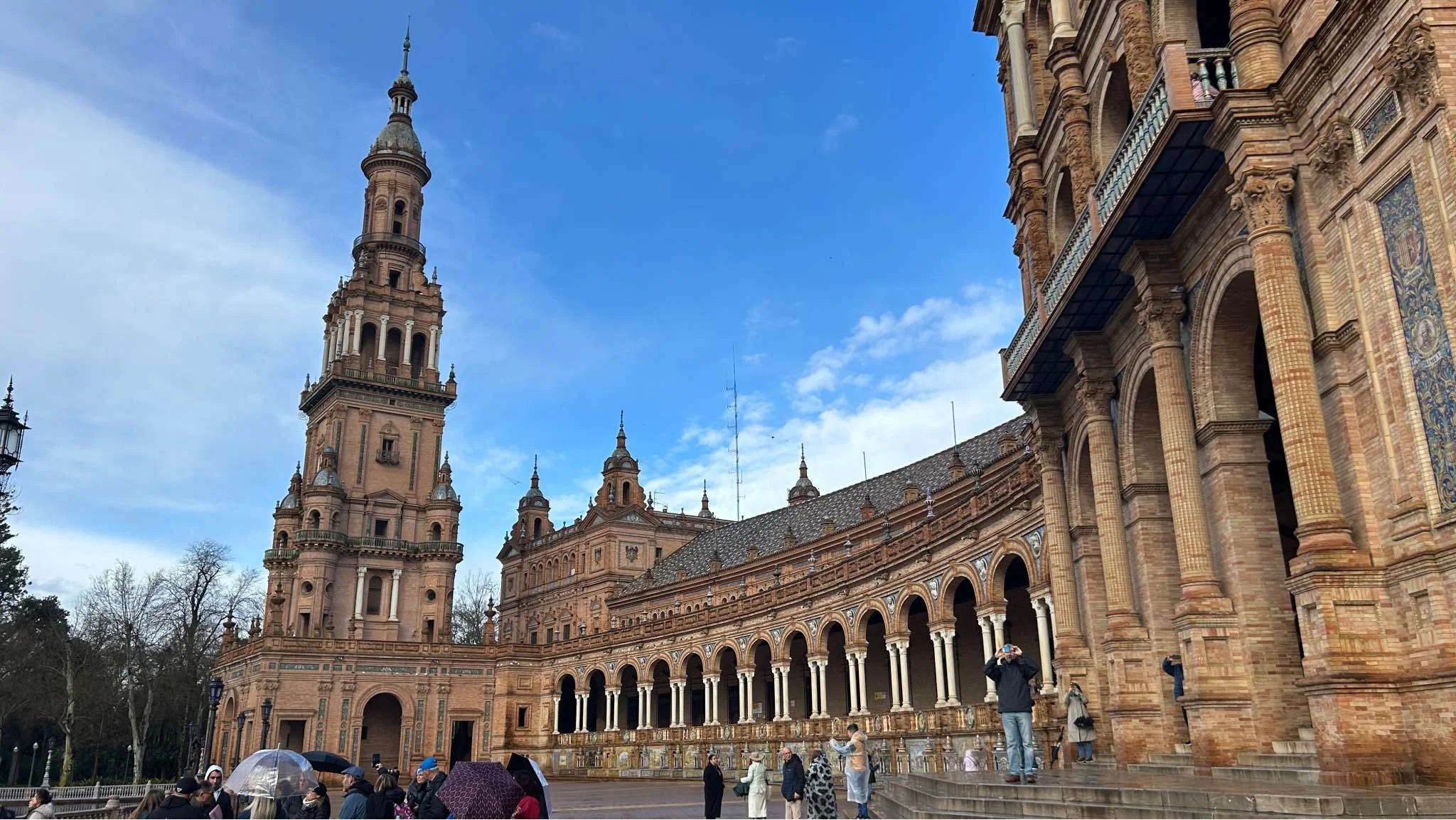
After breakfast the next morning, we had a half-day guided tour of Seville, which includes the Cathedral and its famous Giralda bell tower. We walked through the General Archive of the Indies, the Santa Cruz neighborhood, María Luisa Park, and gawked at the beautiful Plaza de España. During a brief rain, we ducked into a small café and treated ourselves to some local sangria.
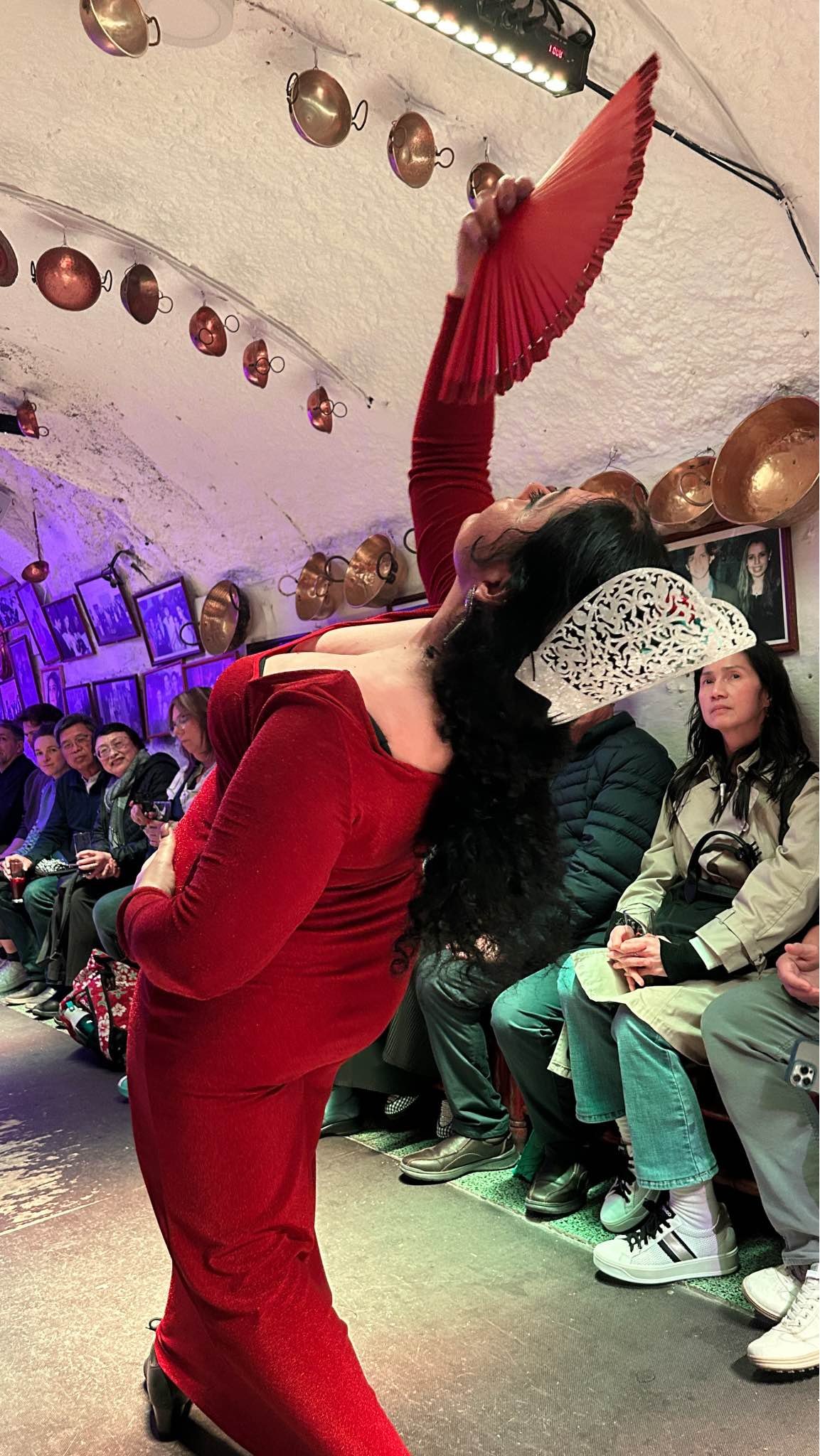
In the afternoon, we had a few hours to explore the city and have lunch on our own. Seville is a wonderful city and high on our list of places to return to. We boarded our bus to journey to Granada. That night, a group of us went to a flamenco show in a small theater carved into the hillside that, in some ways, reminded us of the Cavern Club of Beatles fame. The show was wonderful, and at the end we looked at a large photo near the stage. There, standing about where we were, was Michelle Obama!
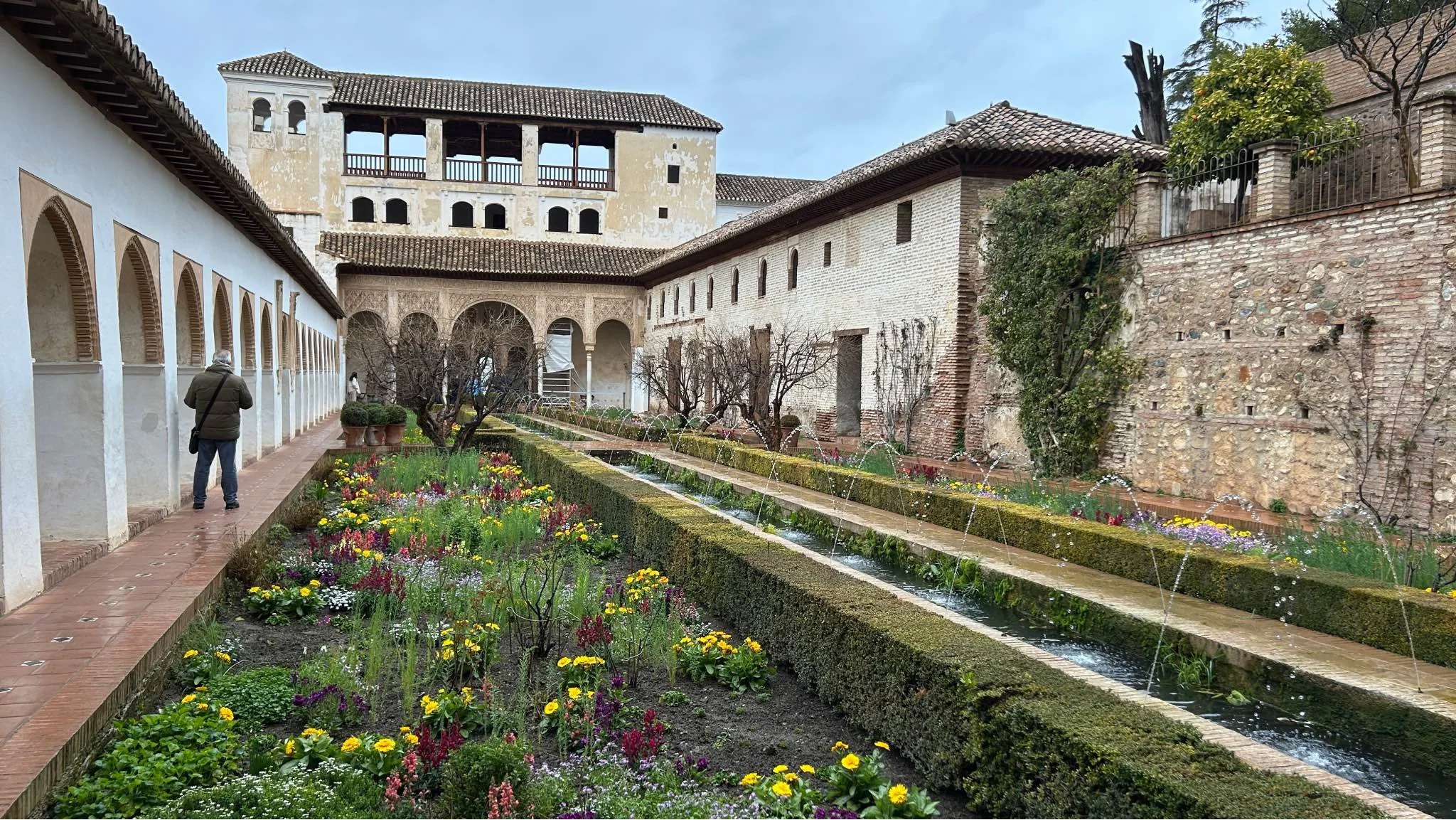
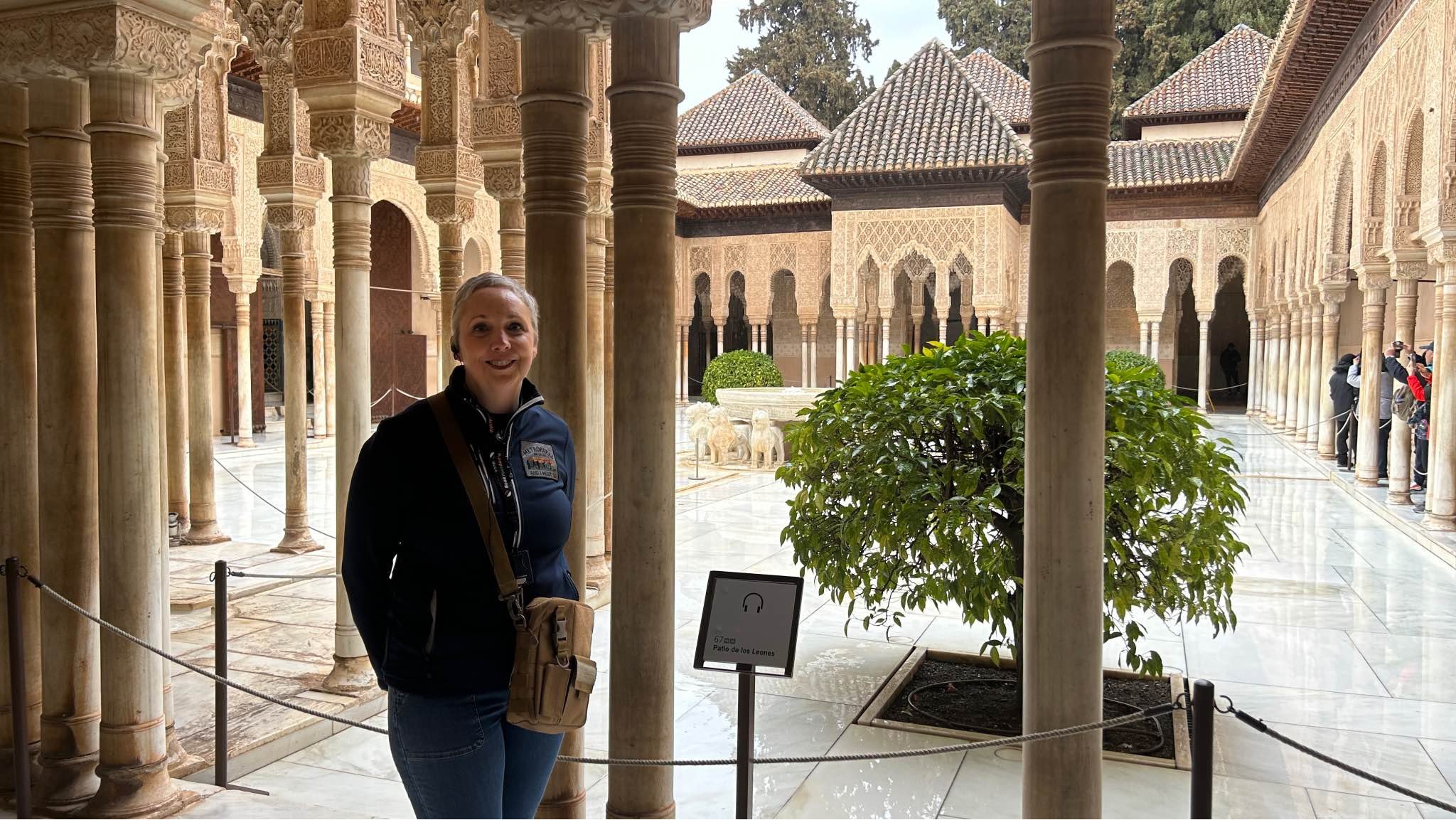
The next day was a tour of the famed Alhambra Fortress and Palace, one of the locations Darren remembered well from his teenage visit. This spectacular architectural wonder is an expression of Moorish and Andalusian culture and offers incredible views of the city that surrounds it. We also visited the neighboring Generalife Palace and Gardens.
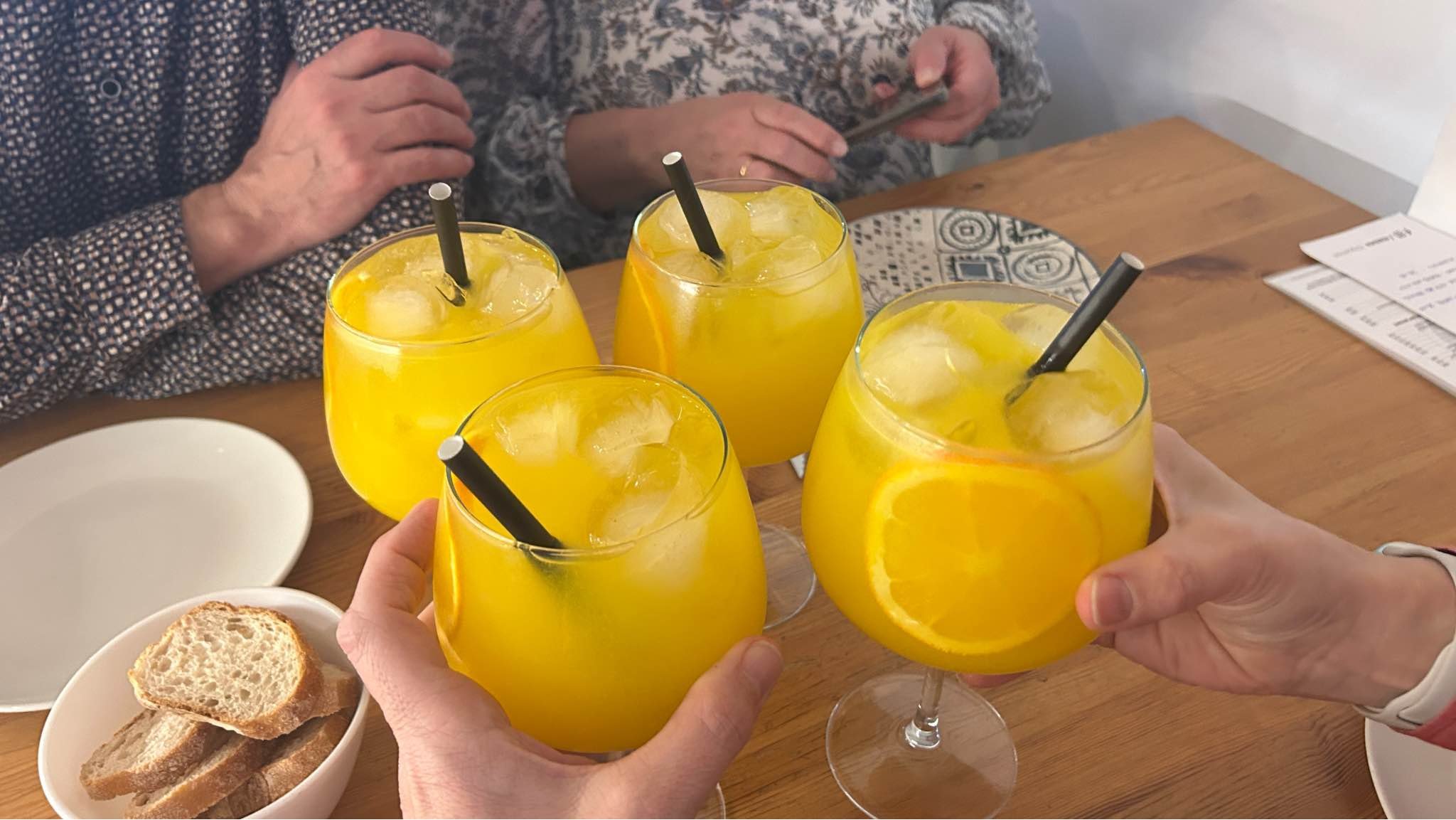
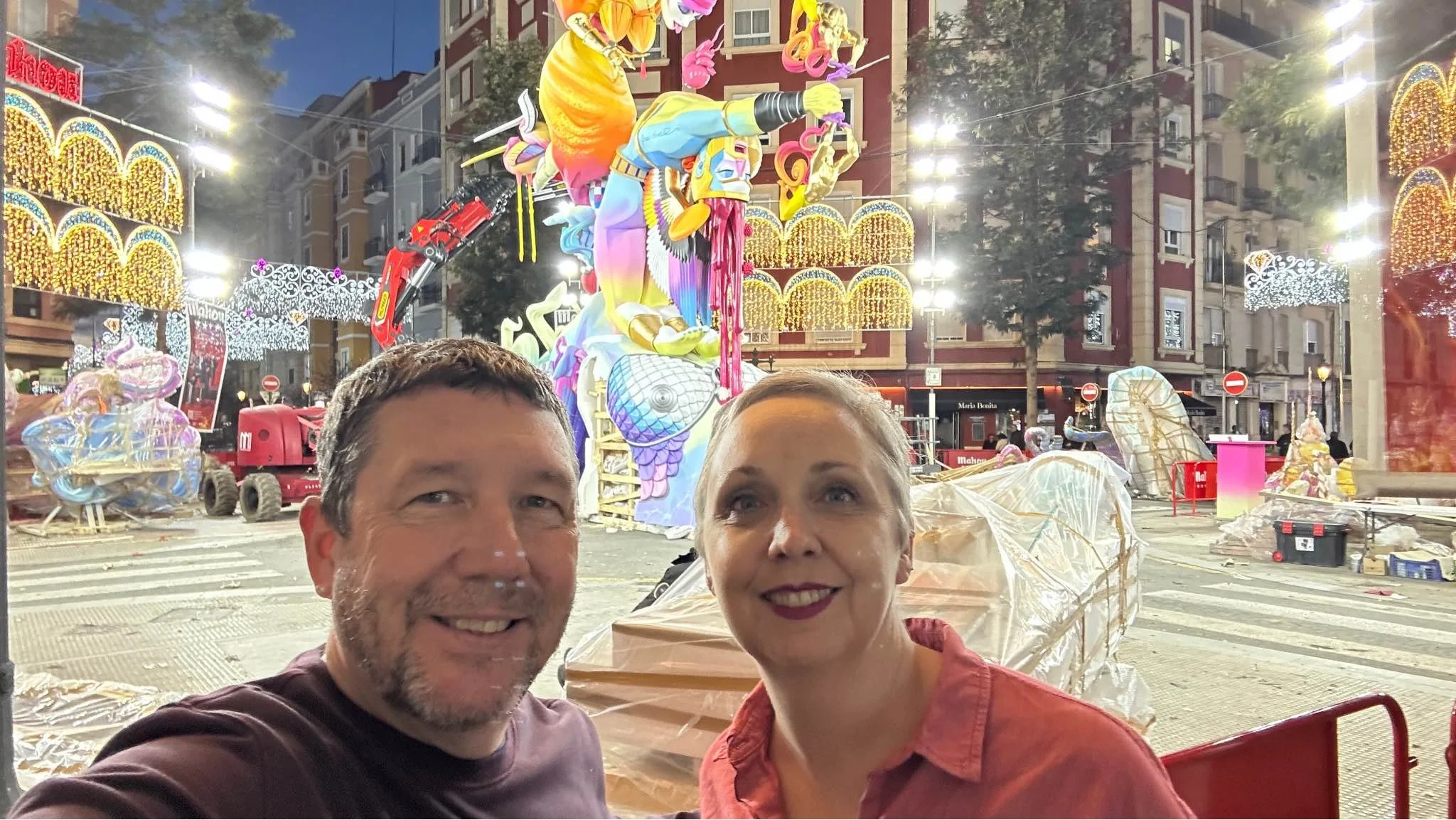
Afterwards, we continued north to Valencia on the shores of the Mediterranean Sea. It was late when we arrived, so we walked around the Carmen neighborhood. The city was preparing for the annual Las Fallas, a festivity that combines tradition, satire, and art. It features massive sculptures made of wood and paper that will be burned at the end of the celebration. We also had the best paella we’ve ever tasted, along with Aguas de Valencias, a local mixed drink featuring cava, gin, vodka, and the famed Valancia oranges.
Missy Travel Tip: Aguas de Valencias go down very smooth and easy, but they pack a punch. 😉
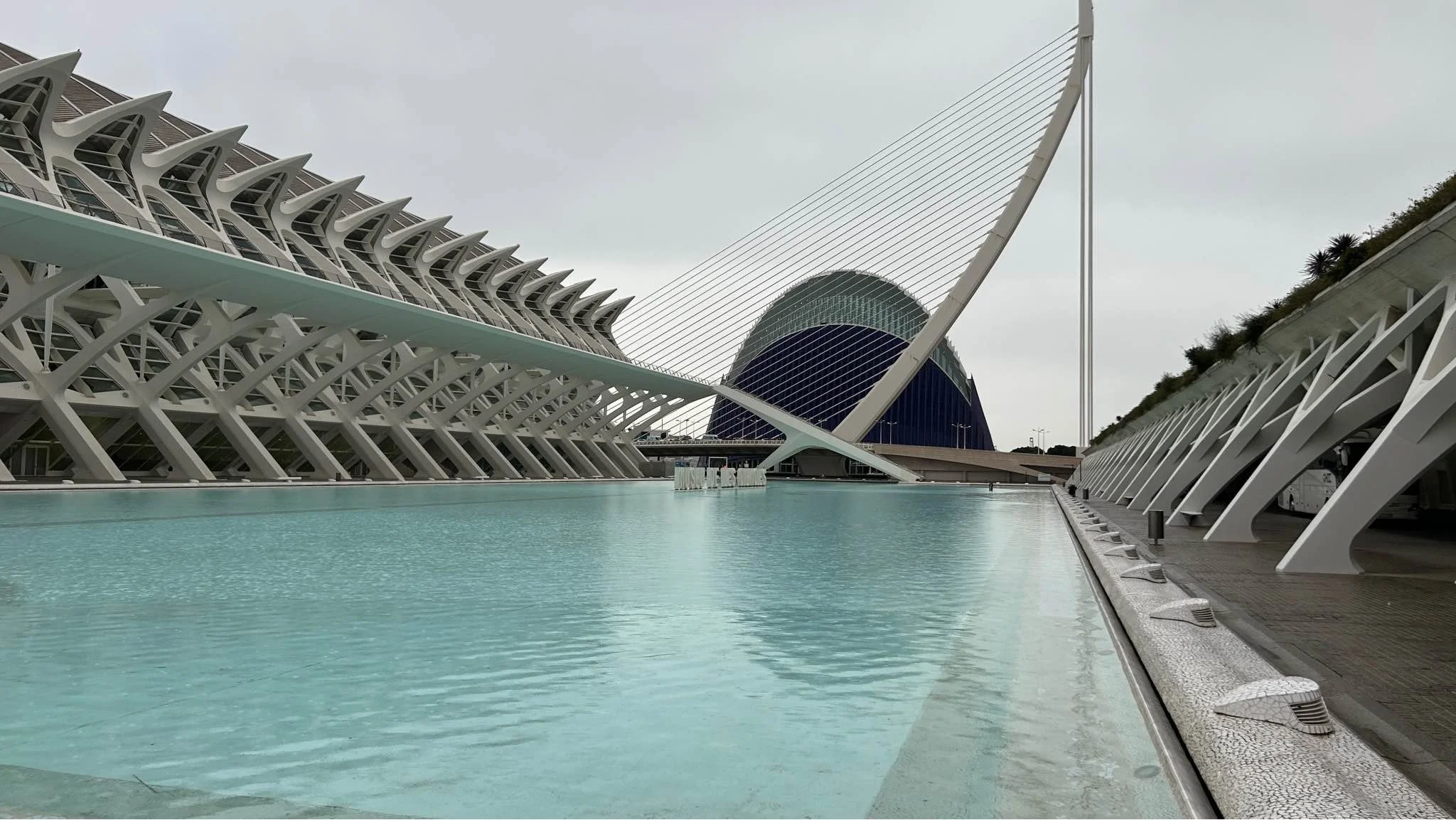
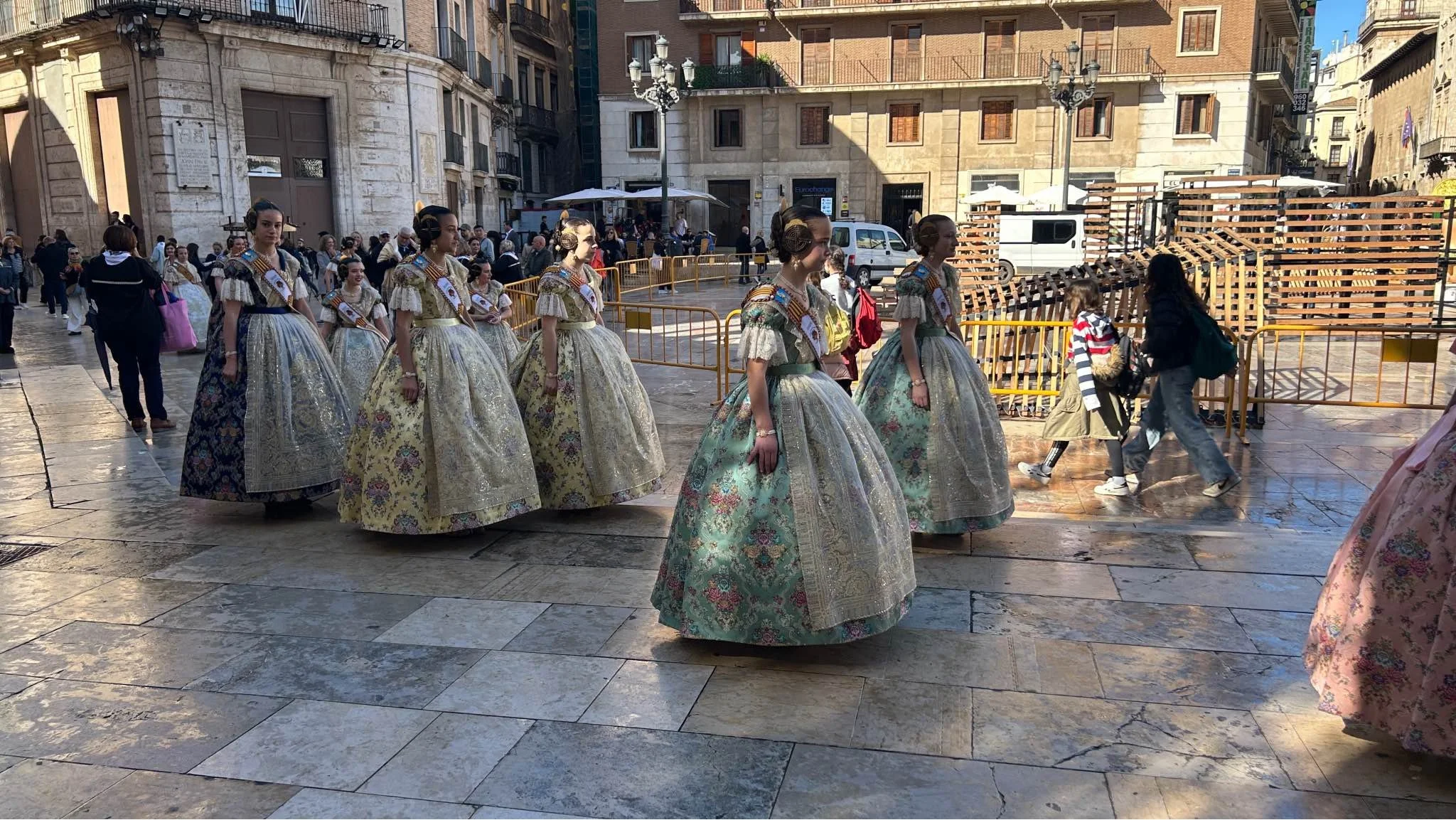
We started the next day with a tour of Valencia, beginning with the city's ultra-modern City of Arts and Sciences. If you have seen the TV series “Andor,” this was used for a number of exterior scenes. We then walked through the old town, visiting the Cathedral and El Miguelete. Next, over to Plaza de la Reina, La Lonja, the Serranos Towers. We also witnessed a parade ahead of Las Fallas with dozens of people in native garb.
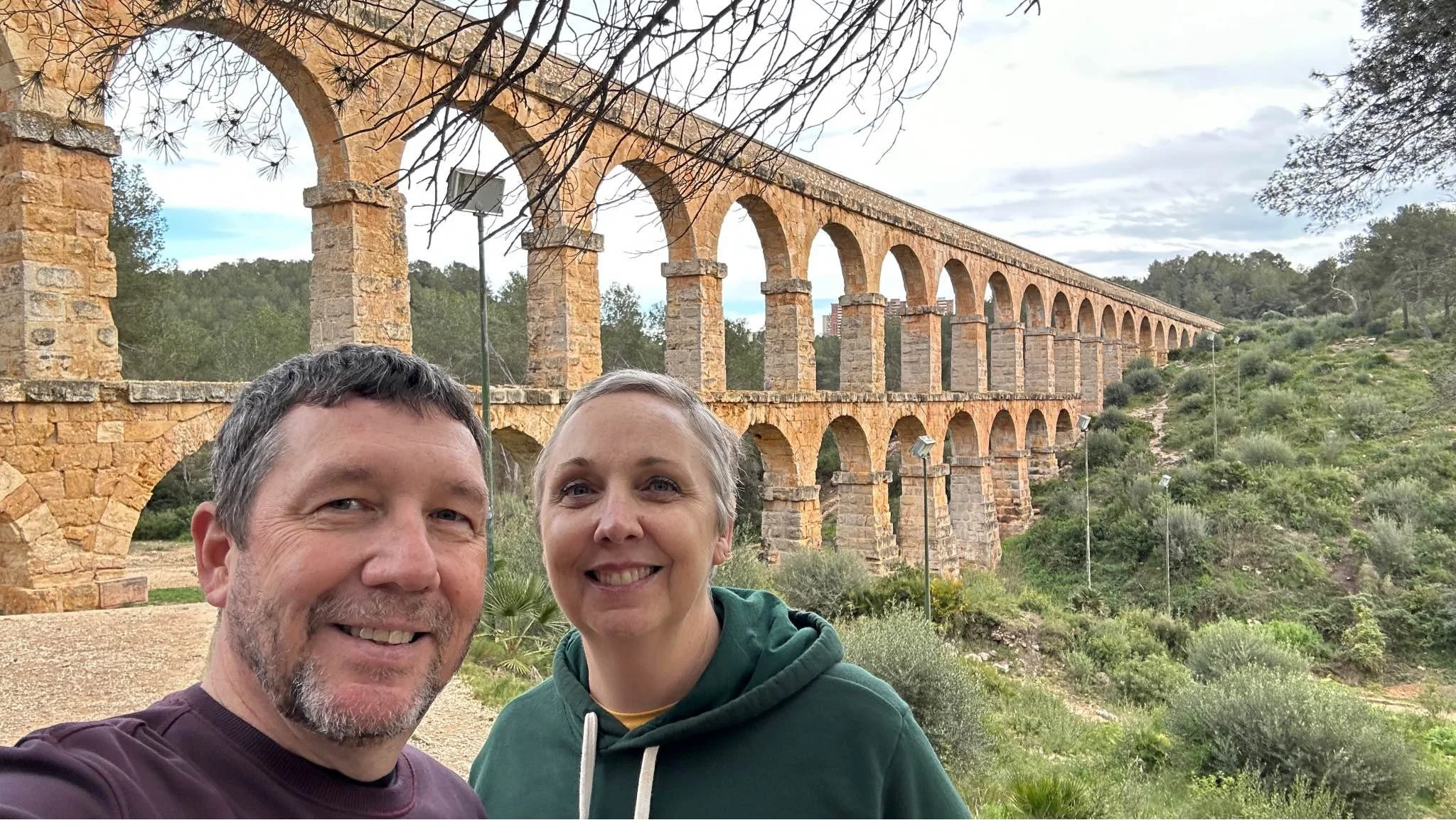
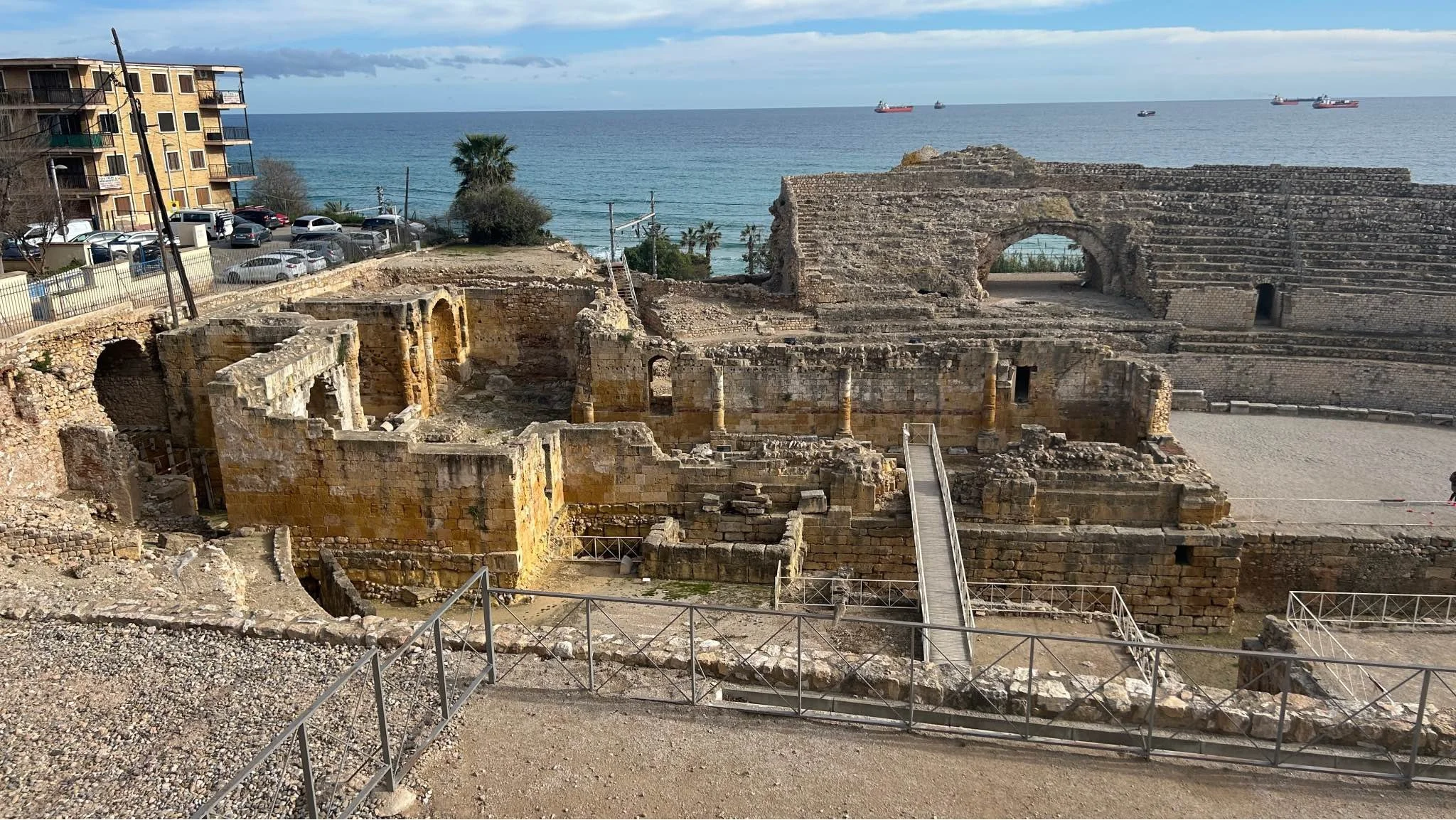
We continued north along the coast toward Barcelona. We stopped for lunch in Tarragona overlooking the Mediterranean and got to see the remains of a seaside Roman coliseum. As we left town, we made an unscheduled stop at a 2,000-year-old Roman aqueduct that took our breath away. Amazing architecture, and we could even walk out on to it! We arrived at our hotel outside Barcelona after nightfall and scrambled to find something to eat. The next day would be exciting!
We started the next day with a morning panoramic bus tour. We went up Montjuïc hill for spectacular views of the old port and then headed down toward the sea to see the famous Columbus Monument and the modern Olympic Port. We took our shoes off and stood in the Mediterranean Sea just to say we did so!
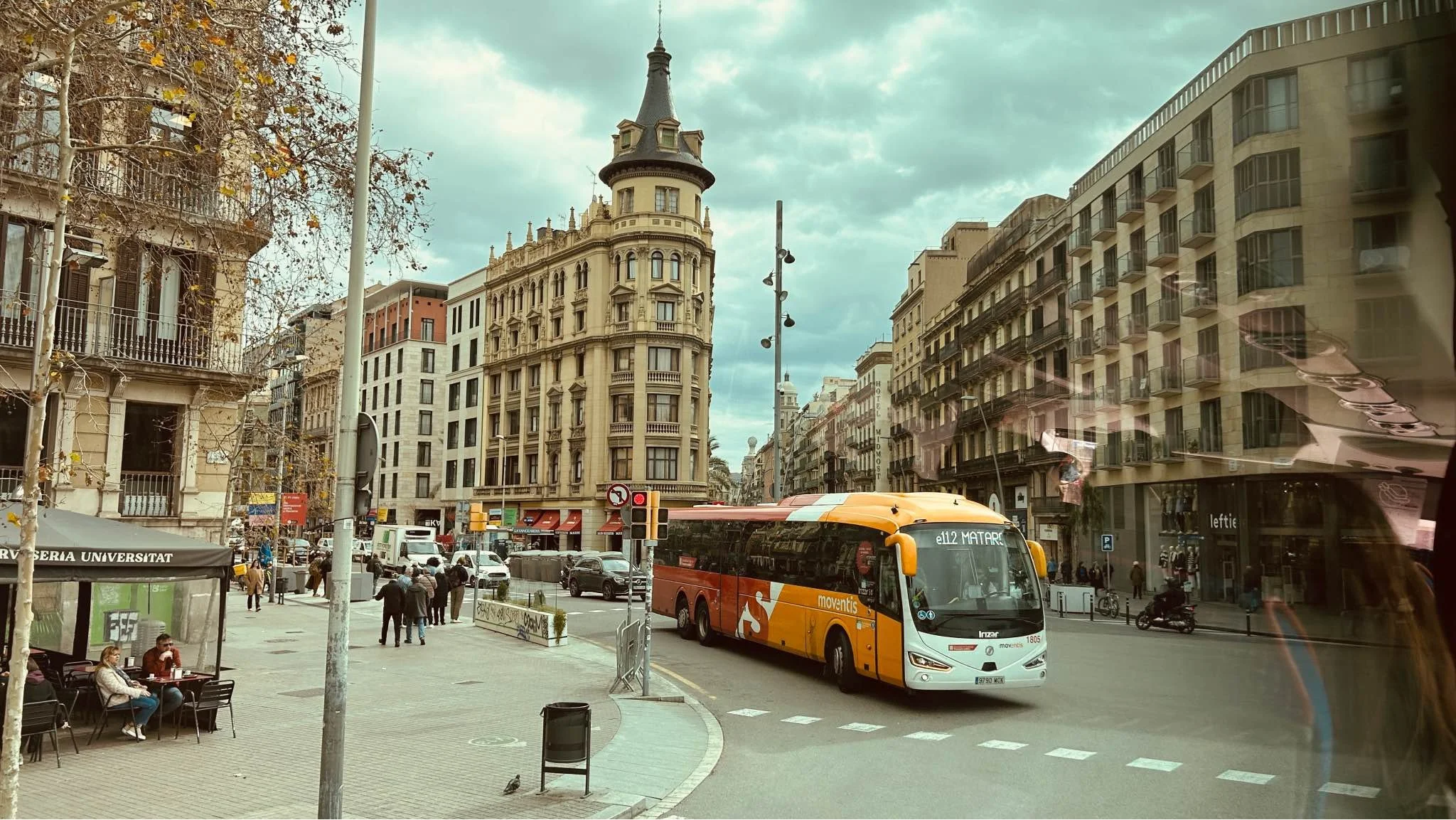
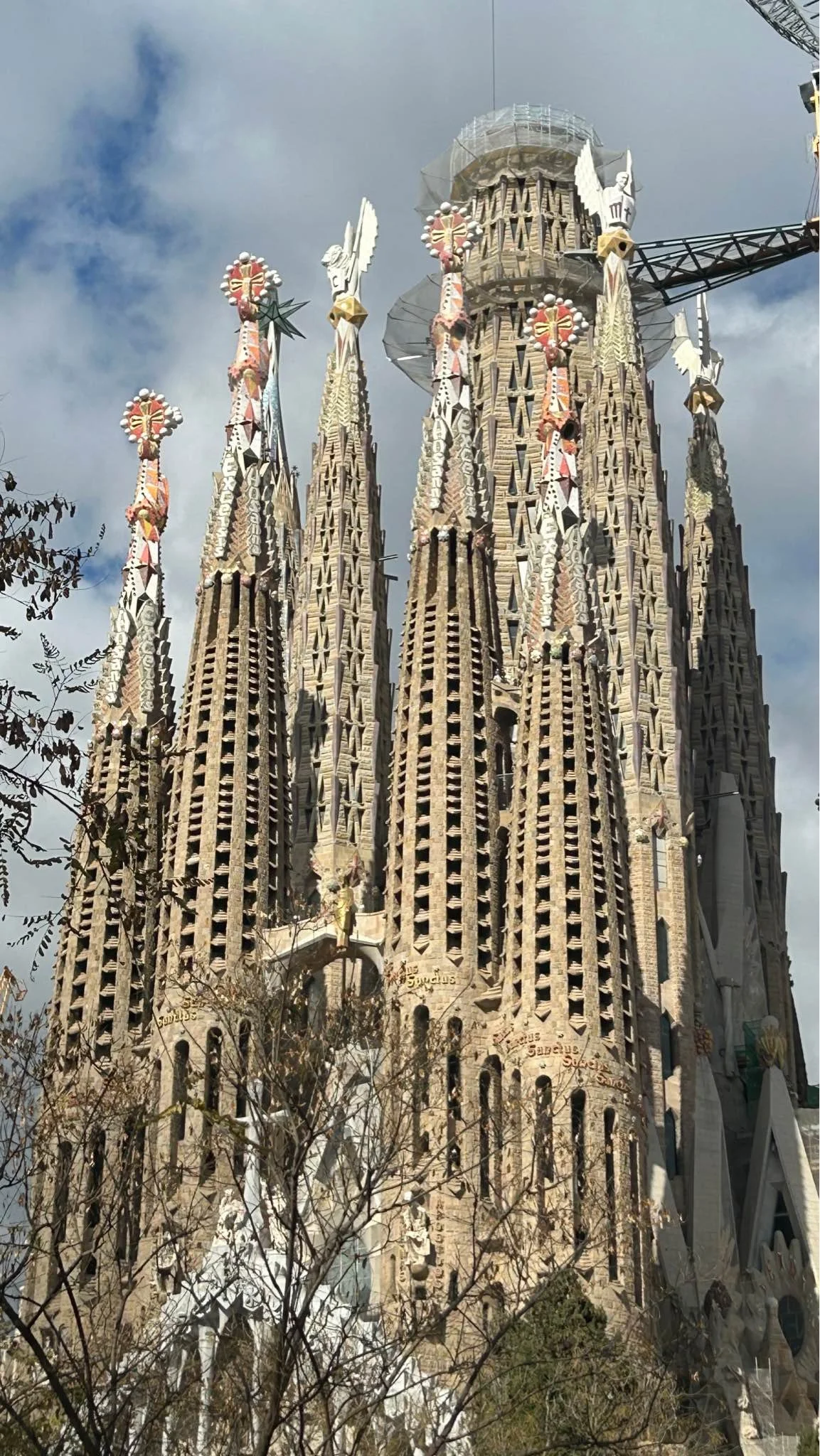
We strolled along the wide, tree-lined avenues of the Eixample district to admire Gaudí's modernist architecture, toured the famous shopping street Paseo de Gracia, and saw the Casa Milà. Then it was time to visit Sagrada Familia, the largest Catholic basilica still under construction. Designed by the renowned architect Antoni Gaudí, construction began in 1882 and continues to this day, with an expected completion date around 2033. It is recognized as a UNESCO World Heritage Site and is one of the most visited monuments in Spain. When we went inside, Darren and I both gasped. It is, without exaggeration, one of the most spectacular buildings I have ever been in.
Missy Travel Tip: Do not go to Barcelona and skip Sagrada Familia. Others in our group took a more expensive tour with an English-speaking guide, and it’s worth the money. Darren and I opted for a less expensive audio tour that is downloaded on our phone and gave us a really good overview of what we were seeing. Also, this is an active church, and you will be asked to dress appropriately.
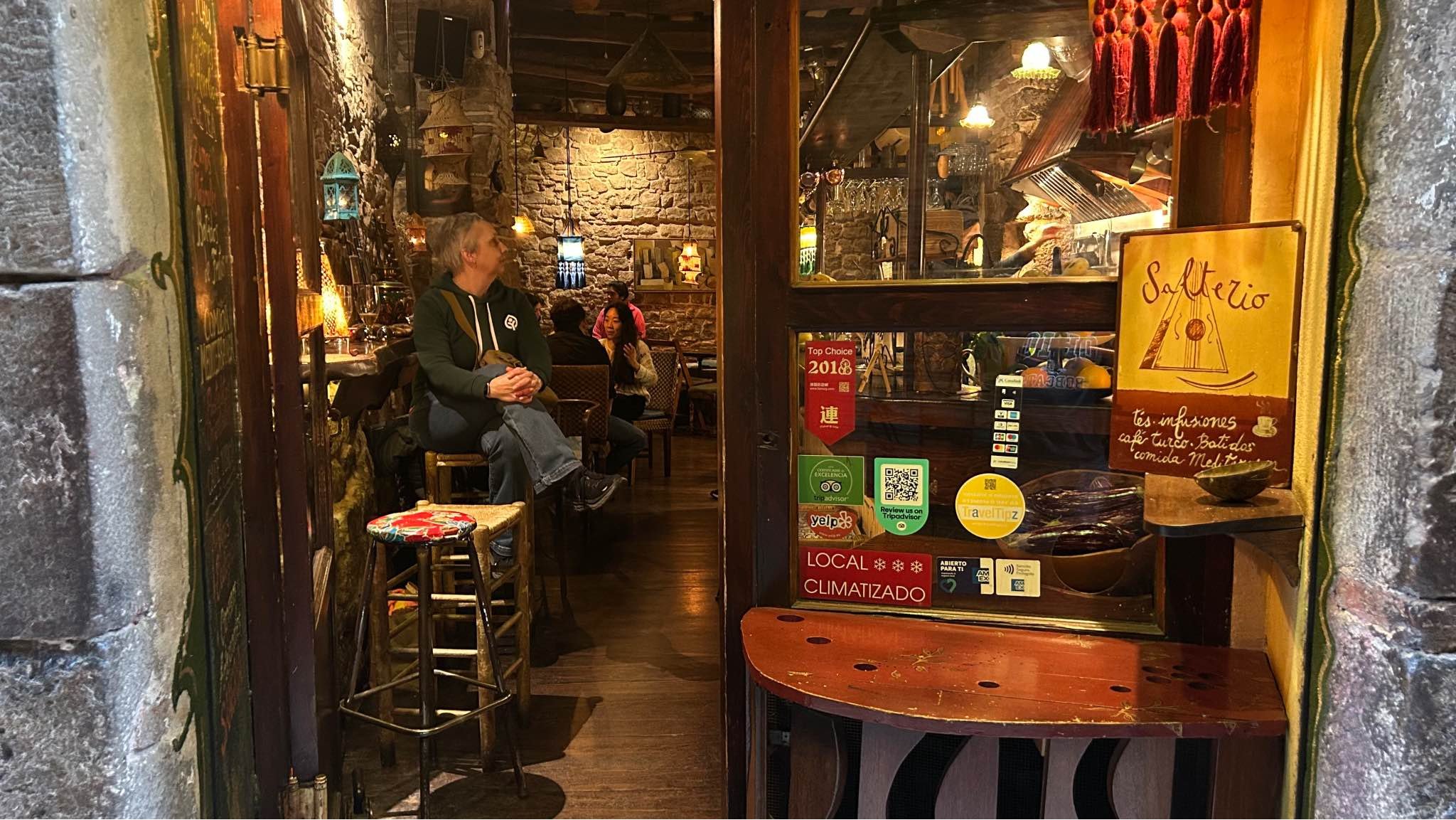
Our afternoon was spent exploring Barcelona at our own pace. Darren and I walked to the historic Old City, known as Ciutat Vella, a district rich in culture featuring the medieval Gothic Quarter and El Raval. We, literally, lost ourselves in the narrow streets and alleys. We found a delicious vegan bakery and a charming hidden pub. This is another city we could spend several more days in. We then hopped the subway (again, fantastic) back to our hotel and ended the evening with a farm-to-table meal at a nearby restaurant with new friends from Canada. The next day we headed back home realizing that, someday, we will go back to Spain.